


Soil compaction builds the literal foundation of any solid construction project. If the ground under a concrete slab or pipe trench settles a few months later, the structural repair costs will eat right through your profit margins. Picking the right gear matters a lot here. A jumping jack rammer is built specifically to pound difficult dirt into a stable, hard base. When you start looking to upgrade your fleet, checking out reliable Construction Equipment from heavy-duty industrial suppliers like LongdoGlobal can save you a ton of headaches down the road. Let us dig into how these machines actually do the heavy lifting and why your crew might need one on the next job site.
Why Are Jumping Jack Rammers Essential for Soil Compaction?
Not every piece of dirt behaves the same way. When you deal with sticky clay or wet silt, standard rolling compactors just glide over the top without doing much work. You need raw downward force to knock the air pockets out of sticky materials. This is exactly where rammers shine.
High-Impact Force for Cohesive Soils
These tools deliver a huge amount of concentrated energy straight down into the dirt. Clay and silt stick together tightly, so breaking those natural bonds requires a very sharp blow. The heavy shoe on the bottom smashes the ground, squeezing out trapped water and air spaces to create a dense base that will not sink over time.
Compact Design for Trench Work
Utility trenches and foundation edges are incredibly tight spaces. A large roller obviously cannot fit down into a narrow water pipe trench. Because rammers stand straight up and have a tiny footprint, your operators can walk them right into a narrow ditch and maneuver around fragile pipes without causing damage.
Superior Compaction Depth
Thanks to the aggressive pounding action, the kinetic energy travels deep into the ground. While wider plates only pack the top few inches of dirt, a quality jumping jack rammer pushes through much deeper layers. This means your crew spends less time doing thin dirt layers and can work much faster overall.
How Does a Jumping Jack Rammer Actually Work?
The mechanics behind these machines look basic on the outside but involve some clever engineering under the cover. It is basically a closed system designed to turn a spinning motor into a violent jumping motion without tearing the machine apart in the process.
Engine Generates Mechanical Power
It all starts right at the top. A gas motor or electric drive creates the initial power. When the operator pulls the throttle lever, the engine spins up to a high rotation speed. The power then travels into a centrifugal clutch that locks in once the motor hits a specific speed.
Crank Gear Converts Rotational Motion
The clutch spins a crank gear system housed in the middle section. This is the crucial part that changes the circular spinning of the engine into a straight up and down stroke. It operates a lot like the internal pistons in a car engine, but in reverse, driving a heavy rod downward.
Spring Cylinder Delivers Impact Force
That metal rod connects to a heavy-duty spring system tucked inside the lower cylinder. The springs catch the downward thrust, amplify it, and push the bottom shoe hard into the dirt. The violent recoil from hitting the ground then bounces the entire machine up in the air, setting it up perfectly for the next heavy strike.
What Are the Key Differences Between Jumping Jack Rammers and Vibration Tampers?
Many buyers mix up rammers and flat plate compactors, often called vibration tampers. They both pack dirt, but they handle completely different ground materials. Using the wrong one on a site will just waste gas and leave you with a soft foundation. Here is a quick breakdown based on typical field data.
| Feature | Jumping Jack Rammer | Vibration Tamper |
| Soil Type | Sticky clay, silt, cohesive soil | Granular sand, gravel, mixed asphalt |
| Impact Style | High force, low frequency (jumps) | Low force, high frequency (vibrates) |
| Lift Depth | Up to 24 inches per pass | Around 8 to 12 inches per pass |
| Best Workspace | Trenches, tight corners, deep footings | Driveways, flat open spaces, wide walkways |
Soil Type Suitability
Like the table shows, rammers are made strictly for sticky clay. If you run a jumping jack on dry sand, it just kicks the sand around and digs a messy hole. Vibration tampers shake loose gravel pieces rapidly until they settle tightly into the empty spaces.
Impact Force Versus Frequency
A jumping jack rammer hits the dirt hard but only a few hundred times a minute. Tampers vibrate thousands of times a minute with a much lighter touch. It is basically the difference between swinging a heavy sledgehammer and using a vibrating hand sander.
Application in Tight Workspaces
Because the shoe on a rammer is so small, it goes where bulky plates cannot. Tampers are heavy to turn around, making them better for large flat surfaces where you can just walk them in long straight lines.
Why Is the LongdoGlobal Rammer RM80L Your Best Equipment Choice?
Finding a machine that hits hard without breaking down after a week is pretty tough. Construction sites eat cheap equipment alive. The Rammer RM80L hits that sweet spot of high performance and long-term durability, making it a smart addition to your gear list.
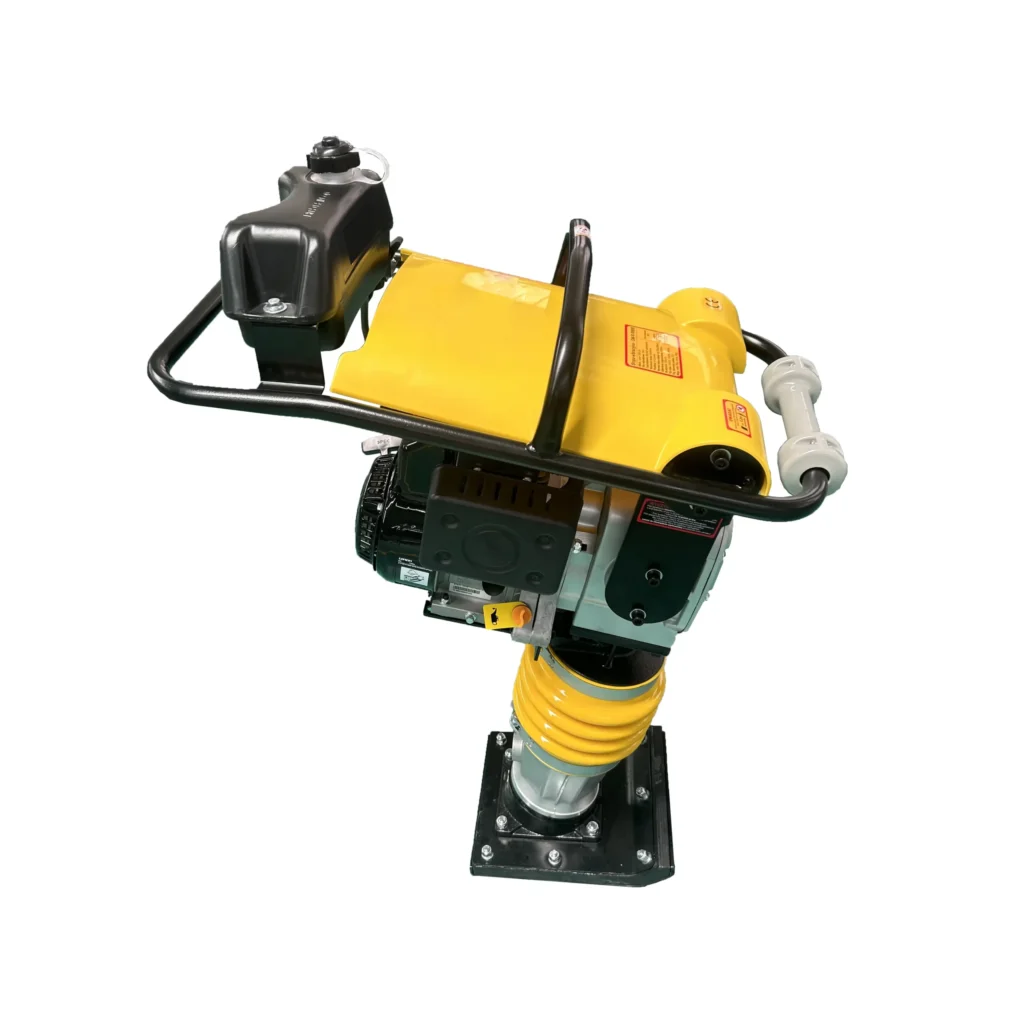
Powerful and Reliable Engine Options
You get a top-tier four-stroke motor that starts on the first pull, even on cold muddy mornings. It delivers consistent power to keep the compaction rate steady, which means your crew finishes the trench right on schedule without fighting stalls.
Durable Shock-Absorbing Polyurethane Bellows
The flexible ribbed boot covering the internal springs takes a massive beating all day. The RM80L features a rugged polyurethane bellow that resists tears, sharp rocks, and oil spills way better than standard rubber. You can read more about this strict manufacturing quality standard on the company About Us page.
Better Design for Operator Comfort
Getting shaken to the bone makes operators tired and sloppy. This specific model uses a heavy-duty shock mount system on the guide handle to block bad vibrations from reaching the hands. Comfortable workers always get more square footage done before lunch break.
How to Select Allied Construction Products for Your Fleet?
You rarely need just one single tool to finish a site. A solid procurement strategy involves looking at the bigger picture and buying allied construction products that work together. Buying piecemeal from random places often leads to mismatched maintenance schedules.
Evaluating Site Soil Conditions
Look at the dirt test reports before buying anything. If your region has heavy clay, buy more rammers. If you mostly deal with sandy riverbed soil, you will definitely want more plate compactors in the shed.
Matching Equipment to Job Scale
Do not bring a tiny tamper to a massive highway project. Match the machine size to the daily workload. Sometimes keeping a few smaller units on hand is way better than hauling a massive ride-on roller to a minor residential driveway repair.
Partnering With Reliable B2B Suppliers
Dealing with a dozen different vendors is a huge headache for your accounting team. Find a supplier that covers everything you need. A good partner offers great Service and a wide catalog. You can source heavy machinery, pick up Workshop Professional Tools for your mechanics, and even grab Garden Outdoor Equipment for site finishing work all in one spot.
How Should You Maintain Your Rammer Compactor?
These machines literally beat themselves up for a living. If you ignore basic upkeep, they will fail fast. A simple five-minute check in the morning saves thousands of dollars in engine replacements and lost labor hours later.
Daily Air Filter Inspections
Dust is the number one enemy here. A clogged filter chokes the engine and pulls dirt straight into the main cylinder. Check the filter element every single day. Tap the dust out or swap it for a fresh one if it looks dark.
Routine Engine Oil Checks
Four-stroke engines need clean oil to survive the extreme shaking. Check the dipstick before every shift begins. Change the oil after the first 20 hours on a brand new machine, and then stick to the manual schedule after that.
Proper Storage and Transport Practices
Never lay a rammer compactor completely flat in the back of a truck. The engine oil will flow into the cylinder and flood the spark plug instantly. Always strap it upright or at a slight angle as recommended. Keep up with industry updates and maintenance tips by checking out the latest News from equipment experts.
FAQ
Q1: How deep can a jumping jack rammer compact soil? A: Depending on the dirt condition, a good rammer can pack cohesive soil up to 16 to 24 inches deep per pass. You should always work in structured layers to get the hardest base possible.
Q2: Can you use a rammer compactor on gravel or sand? A: You can, but it is a bad idea. Rammers are made for sticky clay. Hitting loose gravel with a rammer just pushes the rocks around and can actually damage the machine shoe. Use a vibration tamper instead.
Q3: Why does my jumping jack rammer keep stalling during operation? A: Stalling usually happens because of a choked air filter or a dirty carburetor. Dusty sites clog engines quickly. Clean the filter and put in fresh gas, and the motor should run fine again.
Q4: How often should you change the oil in a rammer compactor? A: Change the oil after the first 20 hours of use to clear out metal shavings from the factory. After that, a complete oil change every 50 to 100 working hours keeps the motor happy.
Q5: What is the average lifespan of a commercial rammer compactor? A: With strict daily maintenance and good quality oil, a commercial grade unit easily lasts three to five years of heavy daily use. Skipping filter changes will kill it in less than a year.
