


Soil settlement ruins foundations. When dirt sinks months after pouring concrete, fixing the cracked slabs costs a fortune. Getting compaction right starts with picking the correct machine for the dirt on the job site. If you buy the wrong equipment, machines break down and crews stand around waiting. A reliable supplier changes everything. For instance, LongdoGlobal builds heavy machinery made for real job sites, keeping projects moving without those frustrating delays. Let’s look at exactly how to choose the right gear for your next big project.
What Is the Main Difference Between a Jumping Jack Rammer and Vibration Tampers?
Telling these two machines apart matters because they handle dirt completely differently. One hits hard, and the other shakes fast. Buying the wrong style means poor compaction and failing your site inspections. It really boils down to how the machine transfers energy into the ground.
Distinct Compaction Mechanisms
A jumping jack rammer acts like a massive mechanical hammer. It jumps in the air and slams down, delivering direct impact force to punch the dirt tight. On the flip side, vibration tampers use a heavy flat steel plate that buzzes at high speeds. The fast shaking makes the dirt particles slide together and lock into a tight base.
Ideal Soil Types for Each Tool
Clay and heavy mud stick together in thick clumps. You need a rammer compactor to smash those sticky clumps apart and force out the trapped air pockets. Sand and gravel act totally differently. The fast buzzing from vibration tampers settles granular dirt perfectly, whereas a heavy rammer just splashes gravel everywhere.
Trench Work vs. Flat Surface Applications
Take a look at the base plates. Rammers have a tiny footprint, making them perfect for dropping into narrow pipe trenches. If you have a massive open driveway or a big parking lot, vibration tampers cover that ground way faster because they glide across the surface quickly.
Why Is a Rammer Compactor Essential for Cohesive Soils?
Clay holds a ton of water and forms tight bonds. If you try to vibrate clay, it just bounces and stays soft. You actually need brutal force to break that structure. Getting the air out of wet clay requires a specific type of downward punching action.
Deep Compaction Force Delivery
The high stroke height of rammers delivers serious power straight into the ground. Every time the shoe hits the dirt, it drives the force deep. You can lay down thicker lifts of clay and still easily pass your density tests.
Superior Maneuverability in Tight Spaces
Pipes and foundation walls leave almost no room to move. Rammers stand upright and balance on a small shoe. A worker can walk the machine right next to a concrete wall or down a tight plumbing trench without snagging on anything.
Recommended Model: LongdoGlobal Rammer RM80L
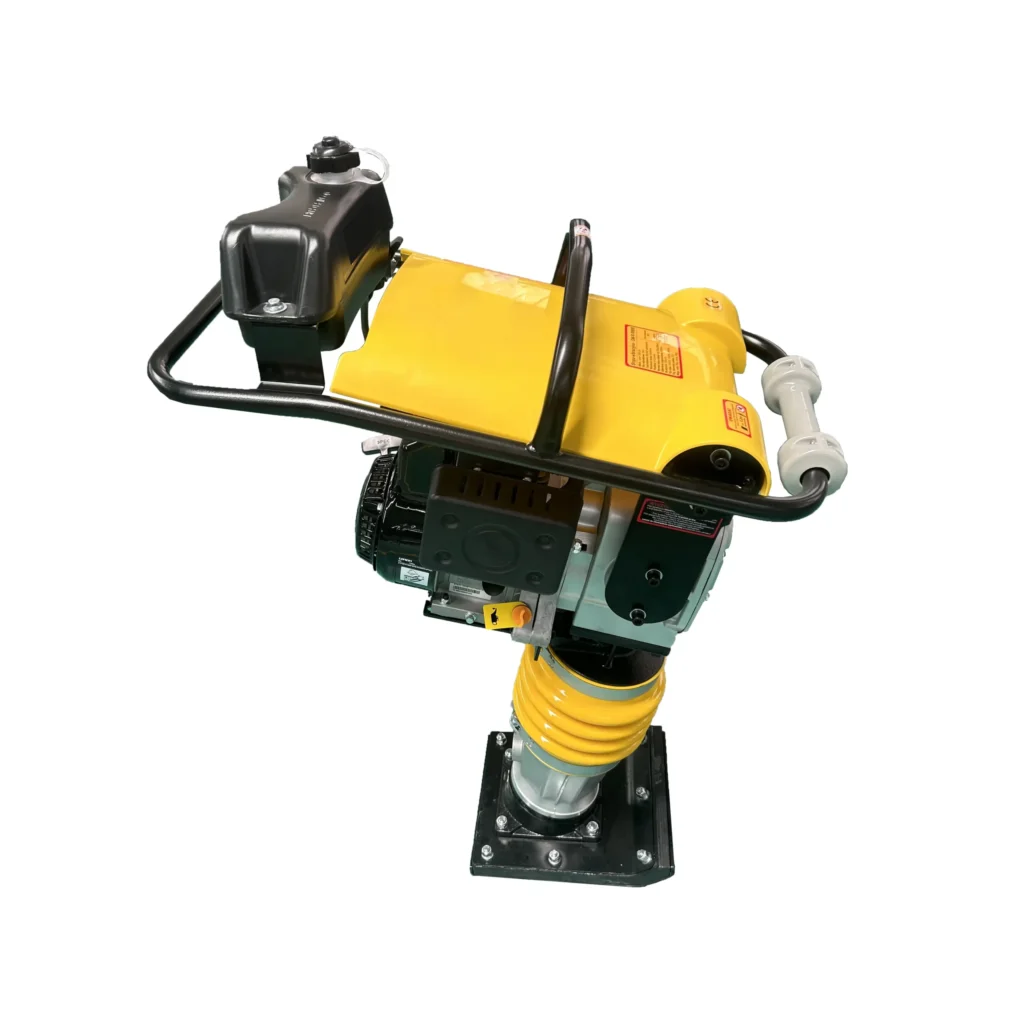
If you want something that takes a beating, the LongdoGlobal Rammer RM80L delivers intense compaction energy while keeping the operator comfortable. It hits with massive force but stays balanced, which means workers get less tired holding it all day.
Watching these machines in action helps clarify exactly how their vertical impact forces the dirt downwards.
Use Vibration Tampers for Your Construction Projects?
Shaking works best when the material is loose and crumbly. Think about a jar of mixed nuts. You shake it to make everything settle. That is exactly how these machines handle sand and crushed rock.
Optimal Performance on Granular Soils
Sand and gravel do not stick together like clay. The rapid shaking from vibration tampers removes the friction between the small rocks. Gravity takes over, and the stones slide into the tightest possible fit in seconds.
High-Speed Surface Coverage Efficiency
These machines basically pull themselves forward. The operator just steers. With a wide bottom plate and fast forward travel, a worker can compact a large patio base in half the time it would take trying to wrestle a jumping jack over that same area.
Smooth Finish for Paving Preparations
Before pouring asphalt or laying block paving, the base has to be totally flat. The wide plate irons out the surface, leaving a slick, level finish that is ready for the next phase of construction without leaving deep footprints.
How Do You Choose the Right Allied Construction Products?
Finding good allied construction products is more than just reading a spec sheet. You have to match the tool to the actual dirt in your area and think about long-term survival on the job site. Here is a quick reference table showing common compaction data.
| Equipment Type | Best Soil Match | Average Compaction Depth | Travel Speed (Ft/Min) |
| Jumping Jack Rammer | Clay, Silt, Mixed | 16 to 25 inches | 30 to 45 |
| Forward Plate Vibrator | Sand, Gravel, Asphalt | 8 to 12 inches | 65 to 80 |
| Heavy Reversible Plate | Deep Granular | 15 to 20 inches | 50 to 70 |
Analyzing Your Project Soil Conditions
Grab a handful of the dirt. If it balls up and sticks together in your hand, you are dealing with cohesive soils and need a rammer. If the dirt crumbles and falls through your fingers, buy a vibratory plate.
Evaluating Equipment Engine Reliability
Dust ruins engines fast. Look for air filtration setups designed specifically for dusty construction sites. Whether you are browsing workshop professional tools or heavy earthmoving gear, a reliable 4-stroke engine starts easier in the cold and saves thousands in repair bills down the road.
Assessing Long-Term Maintenance Costs
Belts break and rubber shocks snap on job sites. Buy machines that use standard parts you can actually find. Cheaper machines cost more when you have to wait three weeks for a simple replacement carburetor.
Where Can You Find Reliable Compaction Equipment for Global Export?
Sourcing machinery across borders feels risky. You worry about shipping delays, poor packaging, or getting stuck with machines that fail on day one. A solid manufacturing partner takes that headache away completely.
Professional Construction Equipment Supply
Finding a factory that handles global logistics makes ordering painless. For heavy-duty needs, checking out dedicated construction equipment catalogs gives you access to machinery built for brutal, non-stop rental yard use.
Comprehensive After-Sales Service and Support
Good suppliers do not vanish after the ship leaves the port. You need access to spare parts diagrams, fast shipping on replacement components, and actual technical help. Quality service setups keep machines running for years, rather than turning them into scrap metal.
About Factory Manufacturing Excellence
Factories that specialize in garden and outdoor equipment alongside heavy industrial machines know how to build tough frames. To see how a serious factory operates, you can check about the manufacturer pages or follow their latest factory updates in the news section.
FAQ
Q1: How deep does a jumping jack rammer compact the soil compared to vibration tampers?
A: Generally, a jumping jack rammer can compact cohesive soils up to 20 to 25 inches deep due to its high-impact force. In contrast, vibration tampers typically compact granular soils to a depth of 10 to 12 inches per lift, depending on the machine weight and plate size.
Q2: Can you use a rammer compactor on gravel or crushed stone?
A: While you can use rammers on gravel, it is not highly recommended. The intense vertical impact can damage the machine shoe and displace the stones rather than compacting them. Vibration tampers are specifically designed to settle and lock gravel and crushed stone effectively.
Q3: What type of engine oil works best for allied construction products like rammers?
A: Most 4-stroke rammer compactors require standard SAE 10W-30 motor oil for optimal performance. Always check the specific engine manual to keep the machine running smoothly and avoid severe engine failure.
Q4: Why does a jumping jack rammer sometimes bounce erratically on hard ground?
A: Rammers need soft dirt to absorb their massive downward impact. If you run the machine on concrete, asphalt, or dirt that is already fully compacted, the energy has nowhere to go and kicks the machine violently back into the air.
Q5: How often should you clean the air filter on vibration tampers during dusty jobs?
A: Construction sites kick up a massive amount of silica dust. You should check the air filter every single day before starting the engine. Tap the loose dirt out daily and replace the paper filter element completely after every 50 hours of operation.
