


Concrete Grinding Wheel & Diamond Disc Guide: How to Choose the Right Grit
Grinding a concrete floor is dirty, loud, and physically demanding. You step into a workspace thinking you just need to scratch up the surface a bit, and suddenly you are staring at a floor covered in thick, sticky adhesive from the 1980s. Picking the correct metal discs for the bottom of your machine makes the difference between finishing before lunch and struggling until midnight. Getting reliable advice and solid gear from LongdoGlobal can save you from buying the wrong attachments and wasting hundreds of dollars on ruined diamonds.
Why Does the Right Concrete Grinding Wheel Matter?
Slapping any random metal disc onto a grinder usually ends badly. The grinding process relies entirely on friction and pressure, and the floor composition dictates exactly what kind of metal tool you need underneath the machine.
Prevention of Floor Surface Damage
Using a disc that is way too aggressive for a soft floor will chew deep gouges into the cement. You end up creating a bigger mess than you started with. Fixing deep scratches requires expensive repair mortars, which completely defeats the purpose of smoothing the floor out in the first place.
Optimal Speed for Construction Equipment
Machines run best when the attachments match the job. Heavy Baumaschinen needs industrial-grade wheels that can handle massive downward force. If you put cheap, lightweight discs on a heavy grinder, the diamond segments just snap off after five minutes of use.
Protection for Grinder Motors
Wrong discs create massive drag. When the diamonds glaze over and stop cutting, the machine has to fight the floor. This puts a huge strain on the internal motor. A burned-out gearbox costs a fortune to replace, all because of a fifty-dollar wheel mistake.
What Are the Main Types of Diamond Bonds?
The “bond” refers to the metal matrix that holds the little diamond pieces together. It seems backward at first, but the rule of thumb is always opposites attract. You pair hard concrete with soft metal, and soft concrete with hard metal.
Soft Bond for Hard Concrete Surfaces
Hard concrete dulls diamonds incredibly fast. A soft bond metal matrix wears away quickly as it rubs against the hard floor. This fast wear constantly exposes fresh, sharp diamond pieces so the tool keeps cutting instead of just sliding around uselessly.
Hard Bond for Abrasive Materials
Rain-damaged concrete or soft cement acts like sandpaper. It eats through metal fast. You need a hard bond disc to resist that extreme abrasion. It holds onto the diamonds longer, preventing your expensive tool from turning into bare metal in under an hour.
Versatile Options for Workshop Professional Tools
Sometimes you just don’t know the exact hardness of the slab. Many Werkstatt-Profiausrüstung come with medium-bond discs. These are great middle-of-the-road options for standard garage floors where you just need to prep for a basic paint job.
How Do You Choose the Correct Grit Size?
Grit size determines how rough or smooth the floor gets. It works exactly like sandpaper. Lower numbers mean bigger, chunkier diamonds that tear through coatings. Higher numbers mean tiny diamonds that leave a smooth finish.
| Diamond Grit Size | Primary Application | Floor Condition |
| 16 to 30 Grit | Heavy removal | Thick epoxy, thick glue, very uneven joints |
| 60 to 80 Grit | Medium prep | Thin paint, light scratches, basic leveling |
| 100 to 120 Grit | Final smoothing | Bare concrete ready for clear sealers |
Low Grit for Heavy Coating Removal
A 16-grit or 30-grit wheel is your heavy hitter. It acts like a shovel, digging up thick carpets glues and stubborn industrial epoxies. It leaves deep scratch marks, which is fine because you will smooth them out later.
Medium Grit for Surface Leveling
Switching to a 60-grit or 80-grit wheel starts the actual smoothing process. It removes the aggressive scratches left by the lower grits. This is usually the stopping point if you plan to pour a thick self-leveling cement over the top.
High Grit for Final Polishing Stages
A 120-grit wheel makes the concrete feel almost like smooth stone. You use this when you want a clean, unblemished surface for thin stains or clear protective sealers.
Which Machine Pairs Best With Industrial Diamond Discs?
Even the absolute best diamond wheel in the world cannot fix a weak machine. You need serious weight pushing down on the tooling to make the diamonds bite into the slab.
Heavy Machines for Consistent Pressure
Walk-behind grinders use their heavy steel frames to keep the pressure even. Handheld grinders bounce around too much, making it hard to get a perfectly flat surface on a large scale.
LongdoGlobal Concrete Grinder C7230 Performance
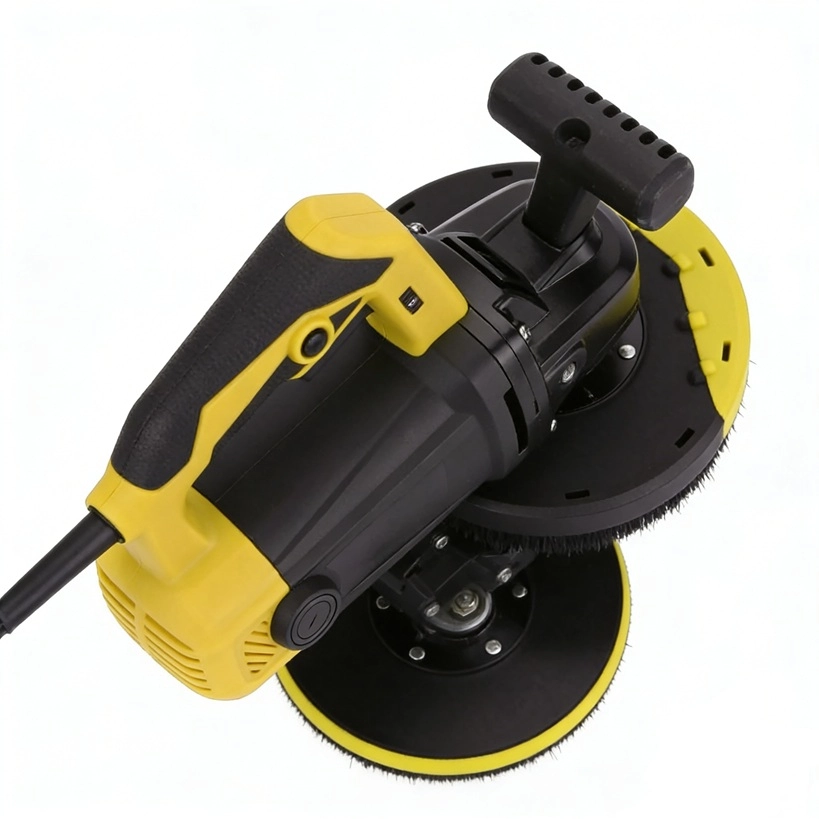
For serious jobs, the Betonschleifer C7230 brings the exact weight and power needed. It spins standard diamond discs at the perfect RPM to prevent glazing. The wide base covers ground quickly, making it a favorite for guys who prep floors all week long. Honestly, pushing a well-balanced machine like this makes you realize how awful old-school rental grinders used to be.
Stable Equipment for Garden and Outdoor Spaces
Working on outdoor patios or driveways means dealing with uneven expansion joints. Heavy, stable Garten- und Outdoor-Ausrüstung keeps the grinding heads flat, preventing them from catching on concrete lips and chipping the diamond segments.
How Do You Know When to Replace the Wheel?
Running a dead wheel just wastes electricity and your time. You have to check the bottom of the machine frequently, especially when working on rough, abrasive surfaces.
Visible Wear on Diamond Segments
Tilt the grinder back and look at the metal blocks welded to the disc. When those blocks wear down to the bare steel plate, the tool is dead. Continuing to run it will just spark and ruin the floor.
Noticeable Decrease in Grinding Speed
If you are pushing the machine at a normal pace and suddenly it feels like you hit a wall, the diamonds are probably glazed. The floor might be too hard for the bond, or the wheel is simply worn out and no longer cutting.
Preventive Care and Routine Service
Clean the dust out of the machine housing when you change the wheels. Keeping up with basic Dienstleistung checks prevents dust from locking up the tool plates.
Where Can You Learn More About Grinding Technology?
Floor prep changes depending on your region and the age of the concrete. Staying updated on different tooling combinations saves massive headaches on the job site.
Consulting Global Support Teams
Reaching out directly to equipment manufacturers gives you access to specific tooling charts. They know exactly which bond works best for different regions.
Knowledge of Manufacturer History and About Us
Checking out the background on an Über uns page shows if a company actually builds their own gear or just slaps stickers on cheap imports. Good manufacturers rigorously test their diamonds.
Following Industry News and Updates
Reading up on Nachrichten in the flooring sector helps you spot new diamond segment shapes, like arrowheads or turbo cups, that strip glue faster than older round styles.
Häufig gestellte Fragen
Q1: Can you use a 30-grit wheel for the entire grinding job?
A: Only if you plan to put a very thick coating over it. A 30-grit wheel leaves deep, visible scratches that will show right through thin paint or clear sealers.
Q2: How long does a standard metal bond diamond wheel last?
A: It depends heavily on the concrete. On a standard residential garage, a good set of diamonds can easily last for five to ten thousand square feet before needing replacement.
Q3: Why did my diamond grinding wheel turn black and stop cutting?
A: The wheel glazed over. The concrete was too hard for the metal bond, causing the metal to melt slightly over the diamonds instead of wearing away to expose sharp edges.
Q4: Do you need to add water when using metal grinding discs?
A: Most modern metal bond discs are designed to run dry, provided you have a strong dust extractor attached. Wet grinding works, but cleaning up the heavy concrete mud is a nightmare.
Q5: Are more expensive diamond wheels actually worth the money?
A: Yes, absolutely. Cheap wheels have very low diamond concentration, meaning you pay for a block of metal that cuts slowly and wears out twice as fast as a professional-grade disc.
