







Figuring out what grit for sanding drywall you actually need can feel like a guessing game. Grab the wrong paper, and you either gouge the wall or spend hours rubbing the same spot. It is all about matching the abrasive to the stage of the job. Whether tackling a small patch in the living room or gearing up for a major renovation, knowing the exact numbers makes a huge difference. Using the right supplies combined with solid equipos de construcción turns a messy, frustrating chore into a smooth process. Before jumping into the details, here is a quick cheat sheet to keep handy.
| Sanding Stage | Recommended Grit | Best Tool to Use |
| Rough joint compound removal | 120 to 150 | Power drywall sander |
| Final smooth finish | 180 to 220 | Pole sander or fine pad |
| Wet sanding (dust-free) | Sanding sponge | Damp sponge block |
Why Is Choosing the Right Grit Important for Drywall?
Picking the proper abrasive level isn’t just about following rules. It directly affects how the wall looks after painting and how much physical effort you have to put in. Start too coarse, and the paper face gets torn. Start too fine, and the mud simply will not come off.
Prevention of Deep Surface Scratches
Heavy grits cut fast but leave scars. If you drag an 80-grit paper across a freshly mudded seam, those deep grooves will show up right through the final coat of paint.
Better Adhesion for Paint and Primer
A wall needs a tiny bit of texture, often called a tooth, so the primer sticks properly. The correct grit leaves just enough microscopic roughness for the paint to grab onto without looking bumpy.
Faster Completion of Construction Projects
Using the exact right abrasive means less time fixing mistakes. When you pair good paper with reliable gear from a company like LongdoGlobal, jobs finish up much quicker and the whole site stays cleaner.
What Grit to Sand Drywall During the First Stage?
The initial knockdown phase is where most of the heavy lifting happens. You are dealing with thick ridges of dried joint compound and tape edges that need to disappear into the flat board.
Heavy Joint Compound Removal Process
Your first pass aims to knock down the high spots. The mud is thick, and the goal is to get it roughly level with the surrounding wallboard without digging into the paper backing.
Usage of 120 to 150 Grit Sandpaper
For this rough phase, 120 to 150 grit is the absolute sweet spot. It is aggressive enough to level out bumps quickly but safe enough if you accidentally brush the actual drywall paper.
Application with Professional Power Tools
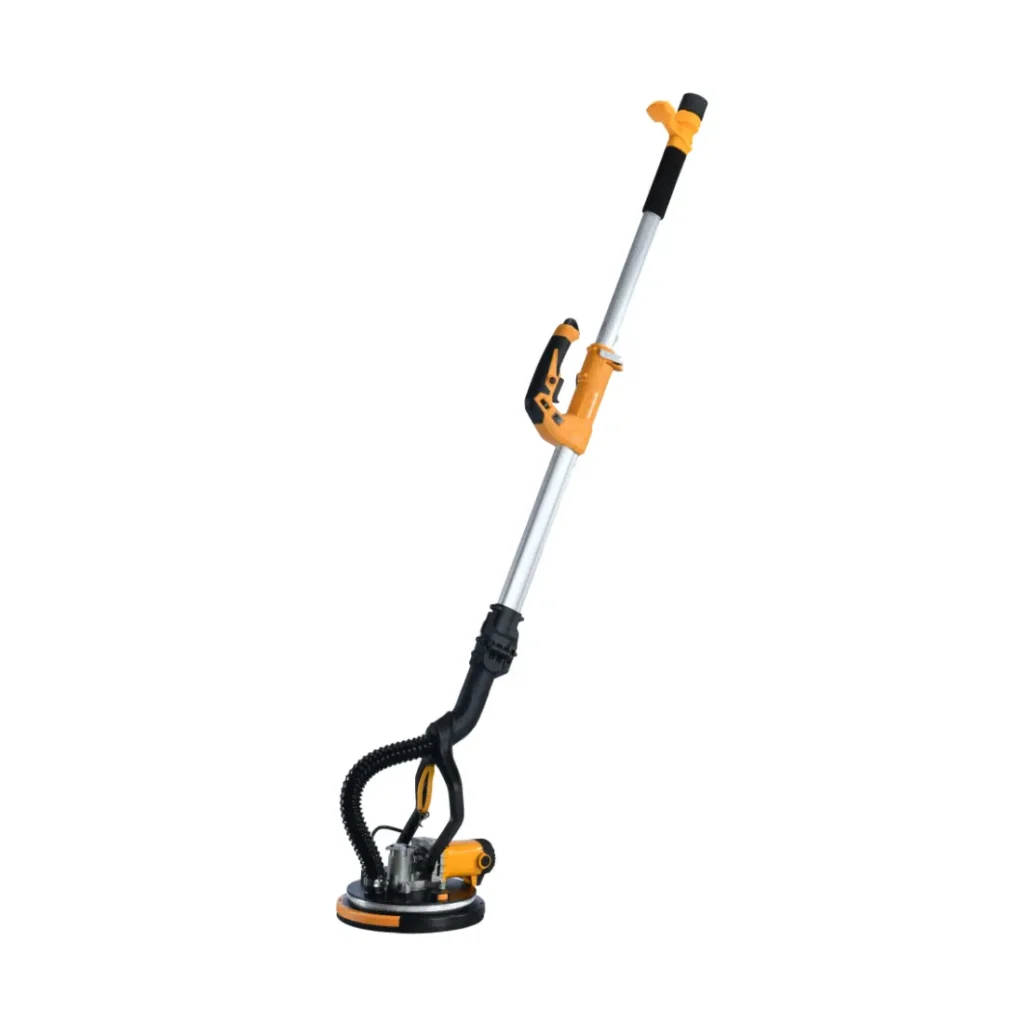
Doing this by hand will wear out your shoulders in ten minutes. Strapping a 120-grit pad to a motorized machine handles the bulk material removal fast. Check out some noticias on how modern power tools are speeding up this exact step for contractors everywhere.
What Grit for Sanding Drywall for the Final Smooth Finish?
Once the wall is flat, the focus shifts to making it look like a single, solid sheet of material. This is where patience pays off and the harsh abrasives get put away in the toolbox.
Elimination of Minor Surface Imperfections
The final pass is just about blurring the edges where the mud meets the paper. You are barely removing material here, just polishing out the tiny scratches left by the previous step.
Selection of 180 to 220 Grit Sandpaper
Switch over to a 180 or 220 grit. Anything finer than 220 will clog up immediately with fine dust, and anything rougher will leave marks.
Ideal Match for Foldable Drywall Sanders
Finishing large areas requires broad, even strokes. A flexible machine head helps maintain flat contact. If you want to learn more about how equipment manufacturers design tools for this exact purpose, read the Acerca de nosotros page and see the engineering behind it.
How Do Mesh Screens Compare to Traditional Sandpaper?
Walk down any hardware store aisle and you will see standard paper sheets sitting right next to fiberglass mesh screens. The price difference is real, but so is the performance gap when dealing with fine dust.
Superior Dust Extraction Capabilities
Mesh screens are full of tiny holes. When hooked up to a vacuum system, the dust gets sucked right through the pad instead of piling up under it.
Longer Lifespan and Tool Durability
Standard paper clogs fast and becomes useless. A screen can just be tapped out or flipped over, meaning one piece lasts significantly longer during a big job.
Excellent Compatibility with the F7233 Model
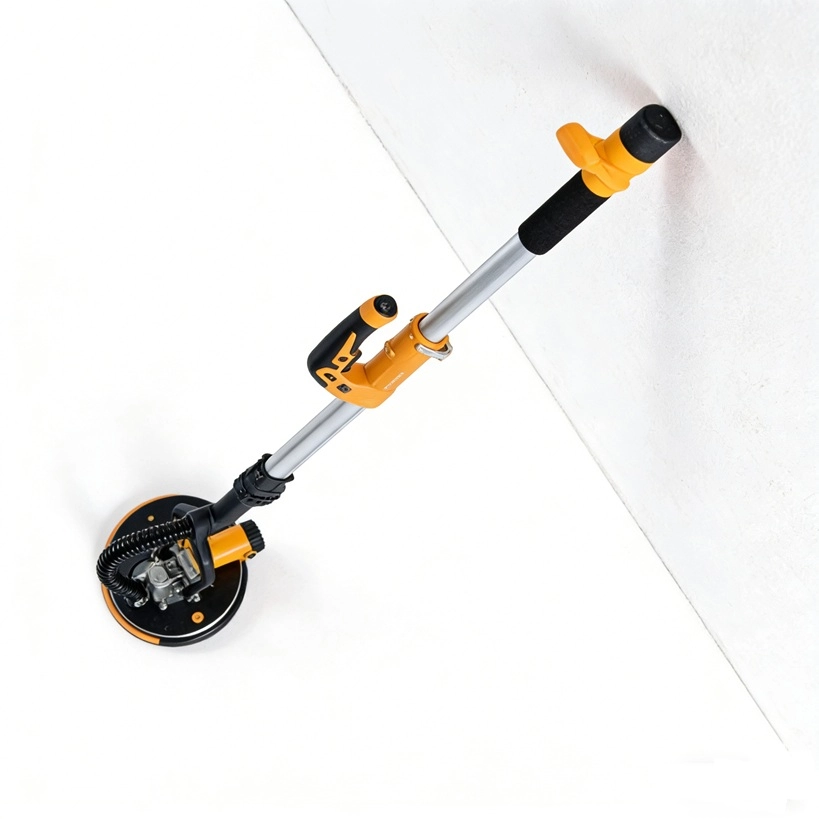
To get the most out of a mesh pad, you need a machine that breathes well. They fit perfectly on the Lijadora para paneles de yeso plegable tipo F7233, allowing maximum airflow and zero dust clouds.
Why Should You Choose the LongdoGlobal Drywall Sander Foldable Type F7233?
Having the right grit doesn’t help if your machine is heavy, awkward, or leaves your house covered in white powder. The F7233 is built to solve those exact headaches.
Efficient Dustless Sanding Performance
Nobody likes breathing in fine gypsum particles. This unit features a built-in suction system that grabs the mess before it ever hits the floor.
Convenient Foldable Design for Storage
Long pole machines are great for ceilings but a nightmare to fit in the back of a car. This one folds in half, making it incredibly easy to pack up and carry to the next room.
Seamless Integration with Various Sanding Grits
The hook and loop base makes swapping from a 120-grit rough pad to a 220-grit finishing screen take about two seconds. Need support keeping your tools running? The servicio network provided by the manufacturer is always ready to help.
What Are the Common Drywall Sanding Mistakes to Avoid?
Even with the perfect paper and a top tier machine, human error can still ruin a perfectly good wall. Avoid these frequent traps to keep the project on track.
Skipping Essential Sanding Grits
Going straight from 80 grit to 220 grit leaves deep scratches that the fine paper simply cannot buff out. Always work your way up the numbers gradually.
Applying Excessive Pressure on Walls
Let the abrasive do the work. Pressing hard flexes the pad and digs the edges into the mud, creating crescent shaped gouges that you will have to fill and sand all over again.
Ignoring Proper Dust Collection Equipment
Trying to dry sand a whole room without a vacuum attachment is a quick way to cover every piece of furniture in your home with fine white powder. Always use extraction.
Preguntas frecuentes
Q1: What grit to sand drywall for the very first time?
A: Start with 120 to 150 grit for the initial knockdown of joint compound. This removes the bulk material quickly without tearing the paper facing on the boards.
Q2: Can I use 80 grit on drywall?
A: It is generally not recommended. 80 grit is far too coarse and will easily damage the drywall paper, leaving deep scratches that are difficult to cover with paint.
Q3: What grit for sanding drywall before painting?
A: A finer grit like 180 to 220 is best right before painting. This smooths out any tiny ridges and prepares the surface for primer.
Q4: Is wet sanding better than dry sanding?
A: Wet sanding creates zero dust, making it great for small patches in occupied homes. However, it takes practice to avoid dissolving the mud, and it is much slower than dry sanding.
Q5: Do I really need a power sander?
A: For a single small hole, a hand block is fine. But if you are finishing a whole room or house, a motorized tool will save days of labor and spare your shoulders a lot of pain.
