


What Are Table Saws Used For? (Plus: How Wood Is Cut When Ripping)
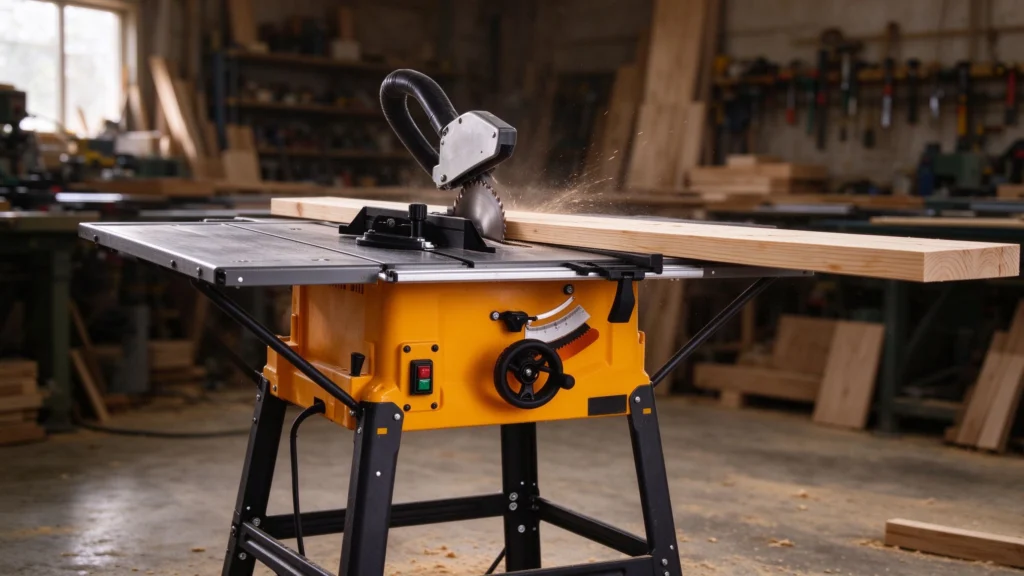
If you’ve spent any time on a manufacturing floor or in a commercial woodworking shop, you already know that the table saw is the absolute workhorse of the facility. Over my years in the machinery export and supply chain business, I’ve spoken with countless overseas procurement managers and workshop owners. A question that still comes up—especially from folks setting up new production lines or training junior staff—is: what are table saws used for, exactly?
At its core, this machine is designed to make straight, dead-accurate cuts efficiently. But to really understand its value on the shop floor, let’s break down its real-world applications and look at the exact mechanics of how wood is cut when ripping.
What Are Table Saws Used For? The Core Shop Floor Functions
There is a reason we consistently ship so many of these units to overseas buyers. The table saw earns its keep through sheer versatility. Here is what makes it irreplaceable:
- Ripping (The Heavy Lifting): First, ripping is the primary function. Ripping means cutting a board lengthwise. Therefore, the table saw is the most efficient tool for breaking down wide lumber into narrower strips.
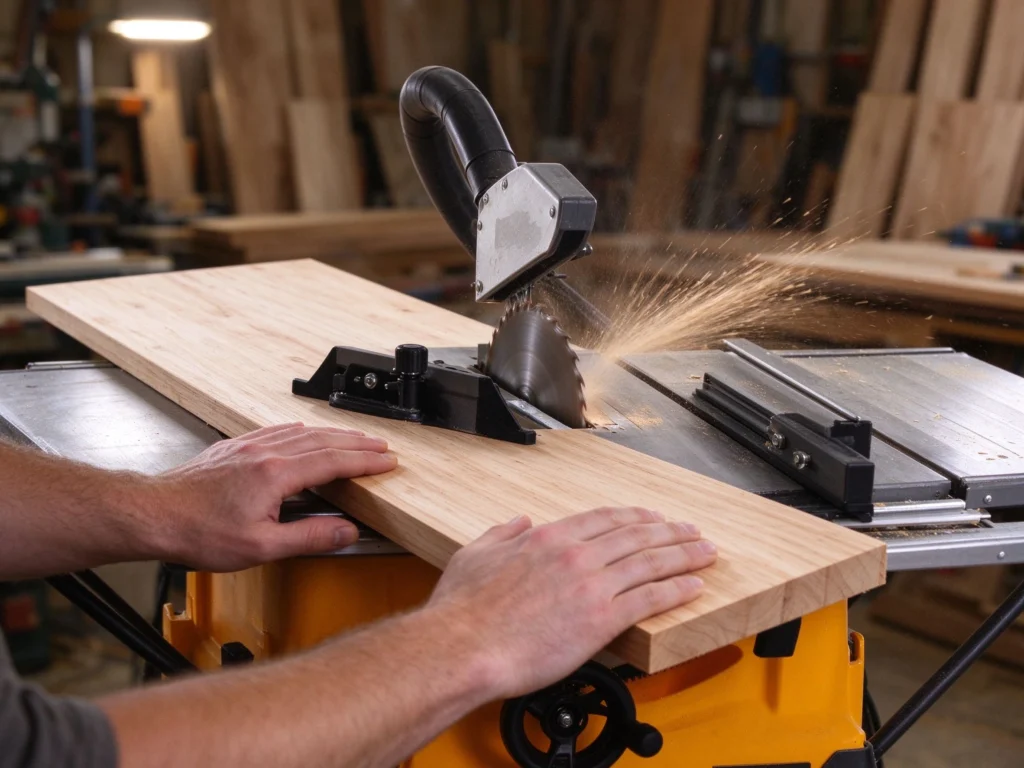
- Crosscutting: Second, operators use it for crosscutting. By sliding the wood perpendicular to the blade, operators achieve perfectly square ends. Usually, they do this with the help of a miter gauge.
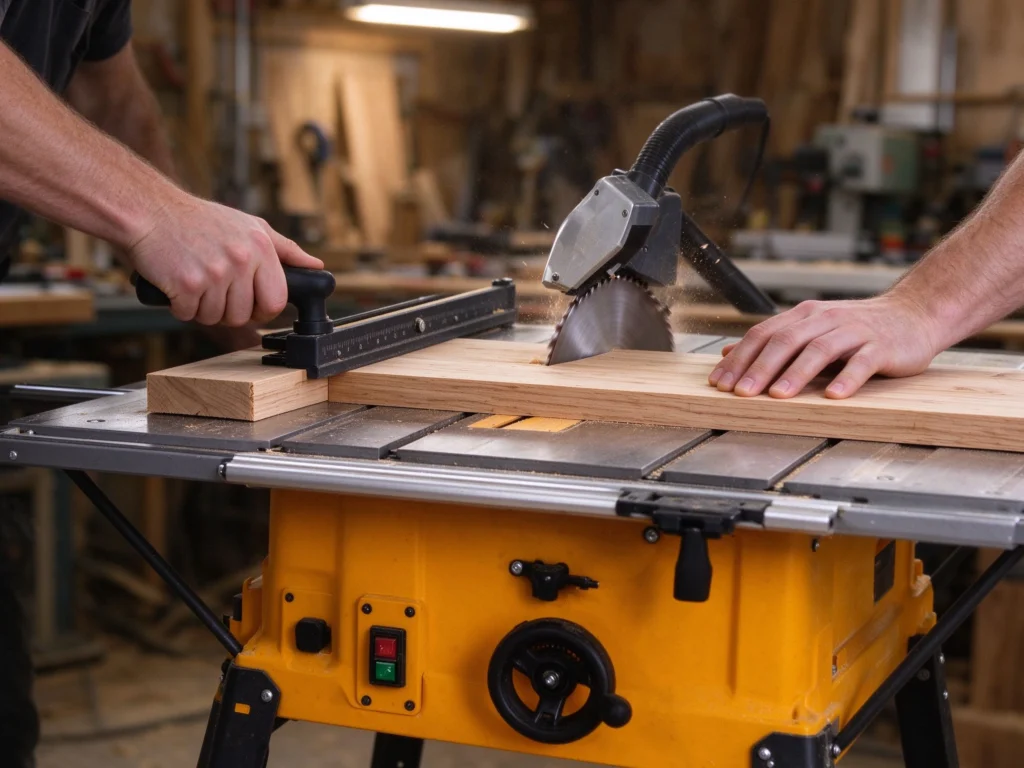
- Beveling and Dadoing: Finally, the machine handles complex angles. Tilting the blade allows for precise bevel cuts. Moreover, swapping the standard blade for a dado stack enables the carving of wide grooves.
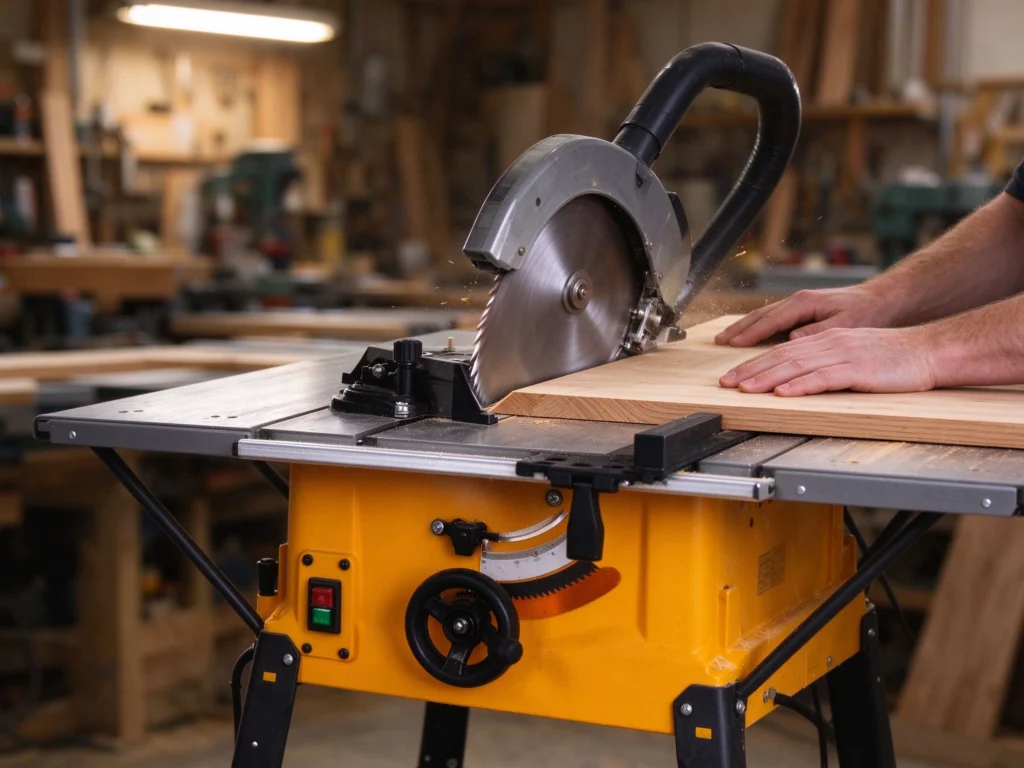
For most commercial operations, the 250mm (10-inch) size hits the optimal balance. Specifically, it provides sufficient cutting depth for standard lumber. At the same time, it maintains a highly manageable footprint for workshop layouts.
How to Use a Table Saw: Setup and Safety on the Floor
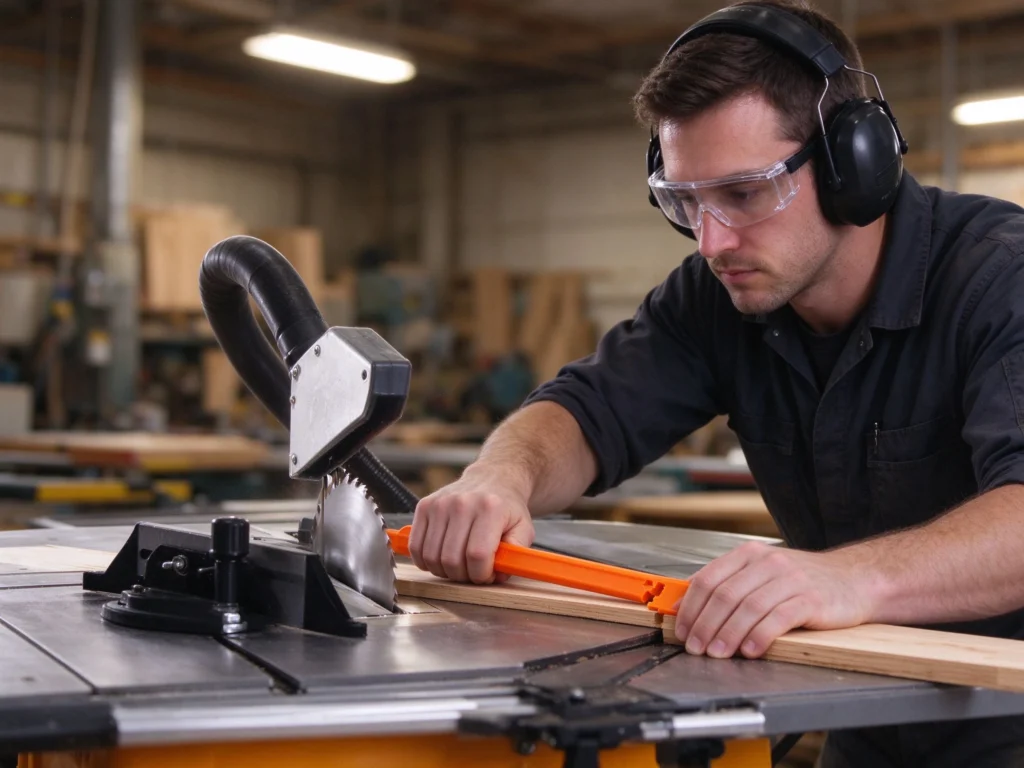
Before we talk about the cutting mechanics, we have to talk about how to use a table saw safely. High-speed industrial motors do not forgive mistakes, and operator safety should always be your top priority.
I always remind our clients to enforce strict safety protocols. First, mandatory PPE: safety glasses and hearing protection are non-negotiable.
Second, machine calibration is crucial. Set your 250mm blade so that the teeth clear the top of the wood by only about 1/8 to 1/4 inch (3-5mm). I see people run the blade way too high—keeping it low reduces friction, prevents burn marks on your lumber, and seriously drops the risk of kickback. Finally, when making narrow rip cuts, keep hands away from the blade and always use a push stick.
How Is Wood Cut When Ripping With a Table Saw?
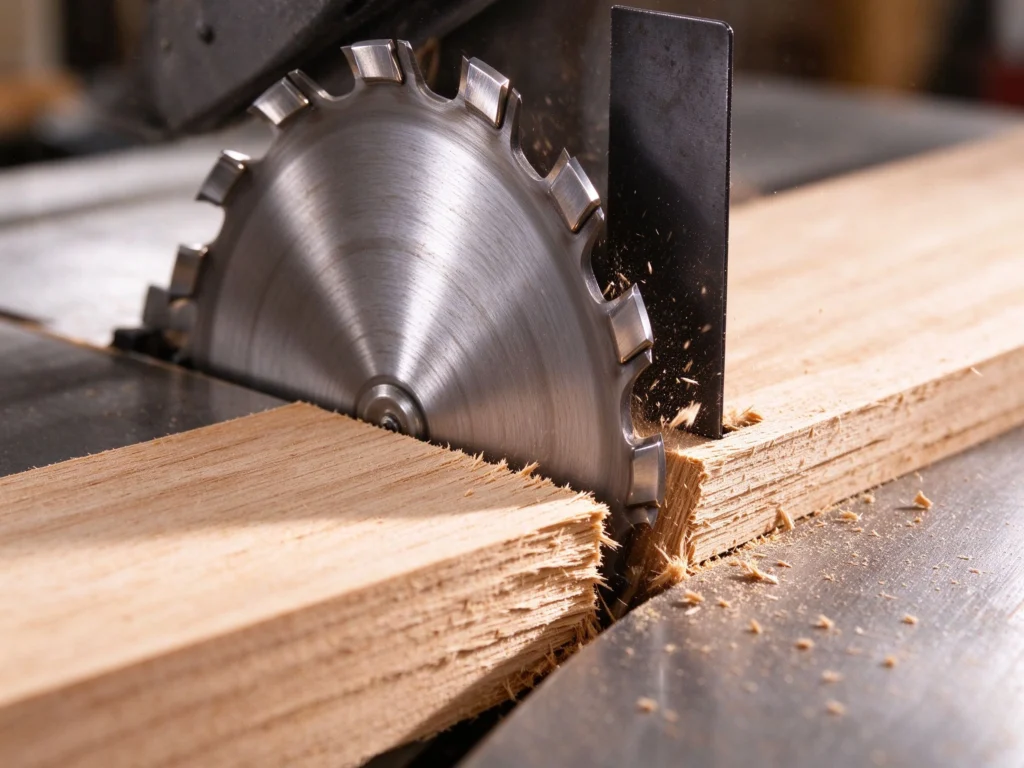
I often get asked about the physics of the machine by buyers comparing specs: how is wood cut when ripping with a table saw? It’s not just a spinning disc pushing through timber; it is a tight coordination between the blade’s tungsten carbide teeth and the operator’s feed rate.
As you guide the wood forward against the rip fence, the blade rotates toward you at thousands of RPMs. Those teeth act like thousands of tiny chisels, continuously severing the wood fibers and clearing the sawdust out through the gullets. For a smooth, safe rip cut, you need three things to align perfectly:
- Consistent Alignment: The edge of your wood must be flat and kept completely flush against the rip fence for the entire pass.
- A Steady Feed Rate: If you force the wood too fast, you’ll bog down the motor. If you push too slowly, the friction will scorch the wood edges. Let the machine do the work.
- Kickback Prevention: Make sure your saw is equipped with a riving knife. When wood is split, internal tension can cause the cut to close and pinch the back of the blade. The riving knife keeps that gap open, stopping the wood from turning into a high-speed projectile.
Sourcing the Right Equipment for Your Operations
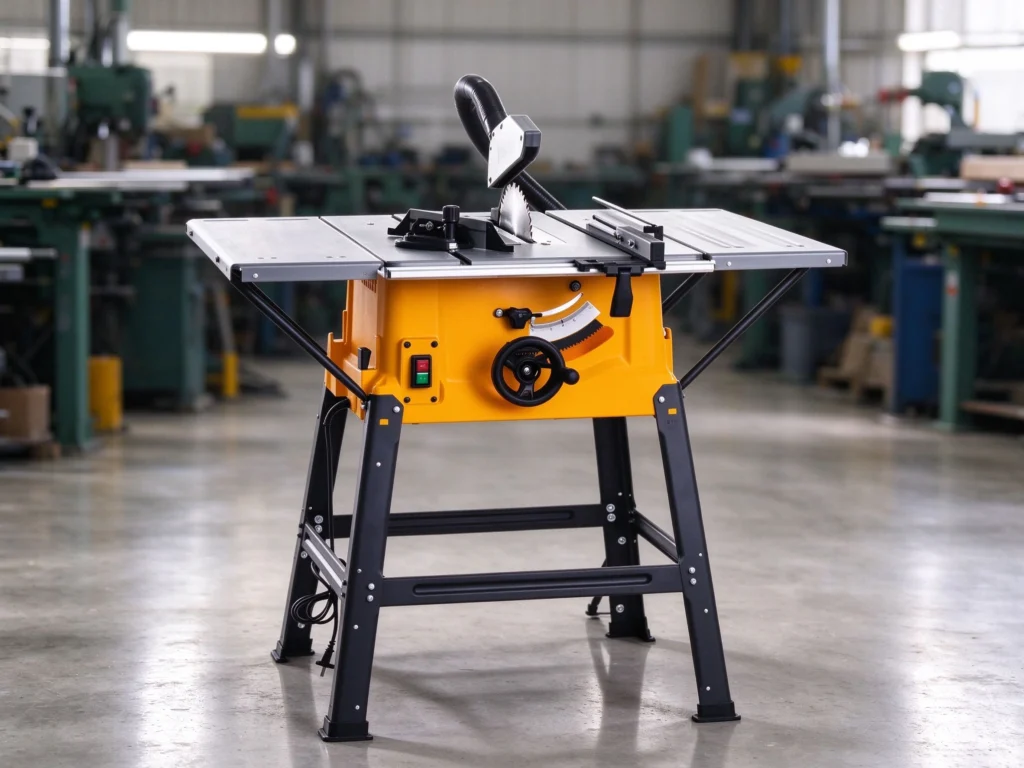
Understanding these mechanics highlights why you can’t cut corners on equipment. If you are sourcing machinery for your facility, you need a unit that won’t stall during heavy shifts.
As a machinery export supplier, our goal is to connect you with reliable, factory-direct equipment that performs without the inflated brand markups. This is why we regularly recommend this 250mm Professional Table Saw for medium to heavy-duty applications. It features a heavy-duty motor capable of maintaining a steady feed rate through dense hardwoods, and a precision-machined cast table for dead-on straight cuts. It’s built for continuous, stable production.
Let’s Upgrade Your Production Line
Whether you are scaling up your workshop operations or looking for a long-term, reliable machinery supply partner, having the right gear is the foundation of your success.
Head over to Longdo Global to see our full industrial equipment lineup, or click through to check the exact technical specifications of our 250mm Table Saw. Reach out for a procurement quote today, and let’s get your facility running at peak efficiency.
Preguntas frecuentes
Q: How thick of wood can a 10-inch (250mm) table saw actually cut?
A: Look at the spec sheet and you’ll see a maximum of 3 1/8 inches (about 79mm) at a straight 90-degree angle. That’s the hard physical limit. For actual daily production, it easily processes standard 8/4 lumber without stressing the motor. Just keep in mind that the moment you tilt the blade to a 45-degree bevel, your cutting depth drops to roughly 2 1/8 inches.
Q: Can I rip a 4×4 post with a 10-inch table saw in one pass?
A: It won’t clear. A standard 4×4 post measures 3.5 inches thick, which beats the 3 1/8-inch blade capacity. The standard practice we see in most workshops is making the first pass, flipping the post 180 degrees, and running it through again to finish the split cleanly. It gets the job done without forcing the equipment.
Q: What is the best blade for heavy ripping on a table saw?
A: The biggest mistake on the floor is leaving a 60-tooth finishing blade on for rip cuts. It burns the wood and overworks the machine. Swap to a dedicated 24-tooth or 30-tooth rip blade. Those larger gaps (gullets) between the teeth are specifically designed to clear out massive amounts of sawdust instantly, keeping the blade cool and your feed rate steady.
