







Plate Compactor vs Jumping Jack: Which is Best for Your Compaction Project?
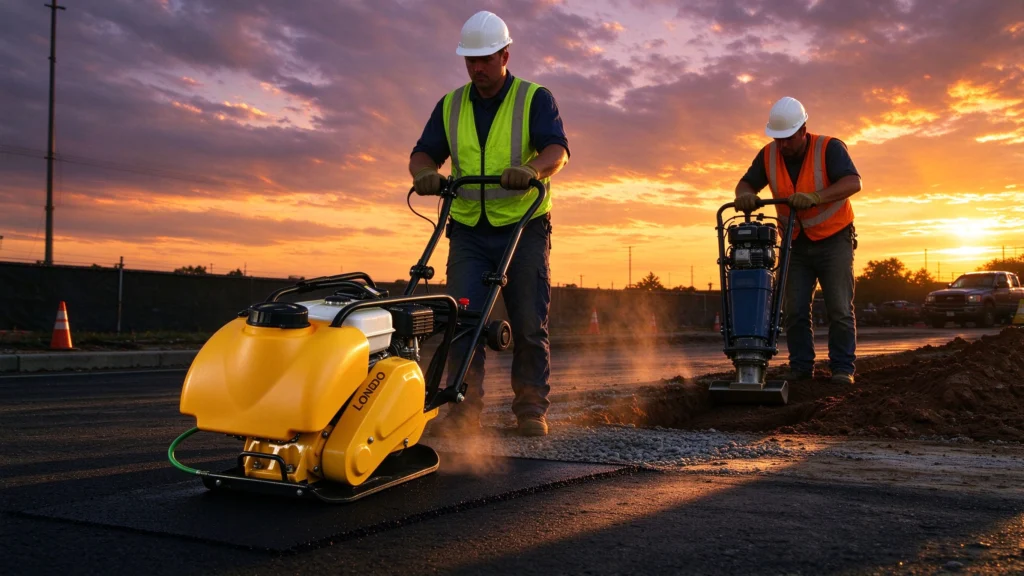
In the construction and landscaping industry, site preparation is everything. Proper soil compaction prevents future settlement, cracking, and costly rework. However, when gearing up for a trench backfill, driveway foundation, or asphalt repair, project managers and contractors frequently face the same equipment dilemma: plate compactor vs jumping jack.
Using the wrong machine for your specific soil type doesn’t just slow down your crew—it compromises the integrity of the entire project. So, how does a jumping jack compactor differ from a plate compactor? And more importantly, which one is the right investment for your upcoming job? Let’s break down the mechanics, the applications, and how to choose the right equipment for the field.
The Jumping Jack (Rammer): Built for Cohesion
A jumping jack, also known as a rammer or trench compactor, operates exactly as its name implies. It uses an engine to drive a relatively small, rectangular foot up and down, delivering high-impact, direct force to the ground.
- Best Soil Type: Cohesive soils like clay and silt. Because clay particles naturally stick together, they require the heavy, aggressive pounding of a rammer to squeeze out air pockets and moisture.
- Ideal Applications: Deep trenches, utility pipe backfilling, and tight, confined spaces where a larger machine simply cannot maneuver.
- The Catch: Rammers are notoriously difficult to handle over large, open areas and can cause significant operator fatigue due to their high center of gravity and intense vertical vibration.
The Plate Compactor: The Master of Granular Materials
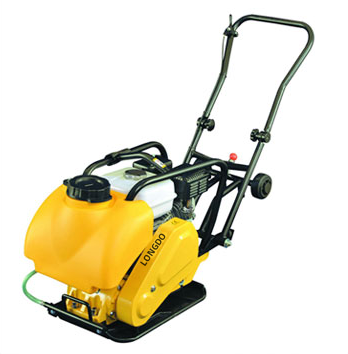
If the jumping jack is a hammer, the plate compactor is a rapid-fire vibrator. Instead of striking the ground with deep impacts, it utilizes a large, flat heavy steel base plate.
But how do plate compactors work in practice? Inside the machine, an engine drives an eccentric weight that spins at high speeds. This creates rapid, high-frequency vibrations. When applied to the ground, these vibrations eliminate the friction between soil particles, allowing them to settle densely under their own weight.
- Best Soil Type: Granular soils like sand, gravel, and mixed soils. They are also the industry standard for hot or cold asphalt patching.
- Ideal Applications: Driveways, landscaping sub-bases, paving block installations, and large flat areas.
- The Advantage: Plate compactors cover more square footage quickly, leave a perfectly smooth finish, and are far more ergonomic for operators to guide across a site.
Making the Call: Which Do You Need?
The decision ultimately comes down to your material and your workspace. If you are working deep in a narrow trench with sticky clay, a jumping jack is mandatory. However, if your projects primarily involve sand, gravel bases, landscaping, or asphalt repair, a plate compactor is the indispensable tool for the job.
Engineered for the Field: Choosing a Reliable Solution
Recognizing that granular material compaction is the bulk of everyday site work, equipment reliability becomes the next major hurdle. On active sites, fine sand, dust, and gravel are the natural enemies of engine components and drive belts.
When contractors reach out to us looking for a durable plate compactor for soil compaction solutions, we point them to equipment designed specifically to survive these harsh environments: our Compacteur 12KN C60T.
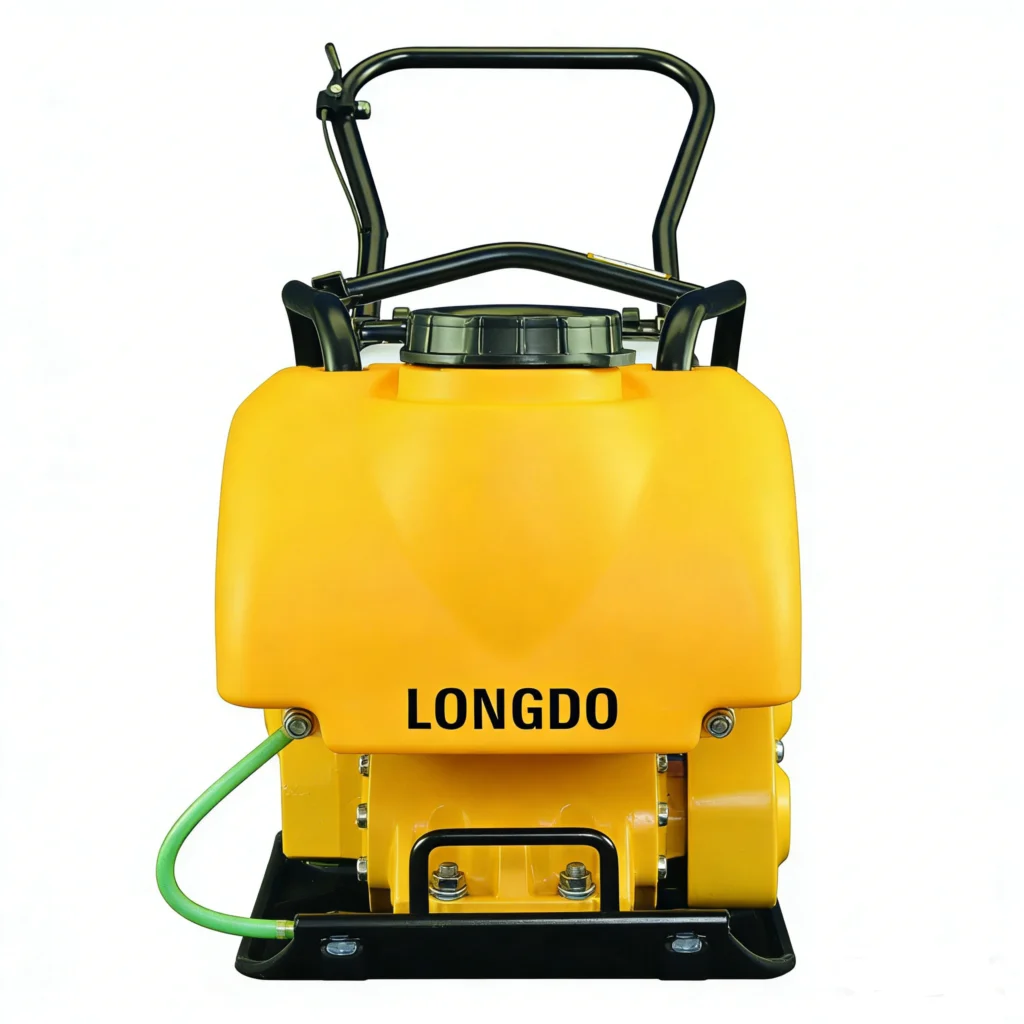
We engineered the C60T series to address the exact pain points crews face daily: equipment downtime and operator fatigue. Here is how it delivers on site:
- Optimal Compaction Force: Generating 12 KN of centrifugal force, the C60T ensures solid, void-free results on sand, gravel, and mixed soils. It provides the exact frequency needed to lock granular materials in place without over-compacting.
- Built to Prevent Breakdowns: One of the most common reasons compactors fail is debris ruining the drive system. The C60T features an open, self-cleaning plate and a heavily sealed belt cover, rigorously protecting the transmission from soil and sand ingress.
- Customizable Power: We know that different regions and rental fleets have different engine preferences for maintenance purposes. Therefore, the C60T is available with a range of proven petrol engines, including Honda, Robin, and Subaru.
- Contractor-Focused Ergonomics: To combat operator fatigue—a major issue on long landscaping jobs—we integrated heavy-duty shock mounts that significantly reduce vibration transfer to the engine and handle.
- Site Mobility: Moving equipment shouldn’t require a forklift. The C60T features a standard lifting hook, a foldable handle, and a built-in wheel kit, making it a ready-to-work solution that is effortless to transport in a pickup truck and easy to store.
Bottom Line
Understanding your soil type is the first rule of compaction. If your upcoming projects involve gravel, sand, or asphalt, a high-quality plate compactor will save your crew hours of labor while guaranteeing a stable, professional-grade foundation.
Equipment should work as hard as the team running it. If you are looking to upgrade your fleet or need reliable machinery for your next landscaping or paving project, explore the technical specifications of our C60T Plate Compactor or reach out to our team today.
FAQ
Q: How does a jumping jack compactor differ from a plate compactor?
A: It really comes down to the dirt you are working with. A jumping jack literally hammers the ground. You need that heavy, vertical impact to force air out of sticky, cohesive soils like clay or when you are deep in a trench. A plate compactor shakes the ground instead of hitting it. That high-frequency vibration is exactly what you want for sand, gravel, and asphalt because it rapidly settles the loose particles together. If you are prepping a flat driveway or patio, a plate compactor will save your crew hours compared to wrestling a rammer.
Q: What is the best plate compactor for landscaping projects and gravel?
A: Landscaping crews usually deal with tight schedules and a lot of site-to-site movement. The best machine is one that packs enough force for solid gravel bases but isn’t a nightmare to load onto a truck. We always recommend our 12KN Compactor C60T for these specific jobs. That 12 KN of centrifugal force handles paver and gravel prep perfectly. More importantly, we built it with a foldable handle and an integrated wheel kit, meaning one worker can easily move it around the site without dragging heavy equipment.
Q: Why is my plate compactor not vibrating or moving forward?
A: If your engine is running fine but the machine won’t vibrate or move, the most common culprit is a damaged or snapped drive belt. This happens frequently on job sites when loose sand and gravel get caught inside the transmission. To solve this industry-wide headache, our C60T is engineered with a fully sealed belt cover and an open, self-cleaning plate to block debris, keeping your equipment running without unexpected downtime.
