


Best Portable Table Saw Buying Guide: Why a 10-Inch Wins
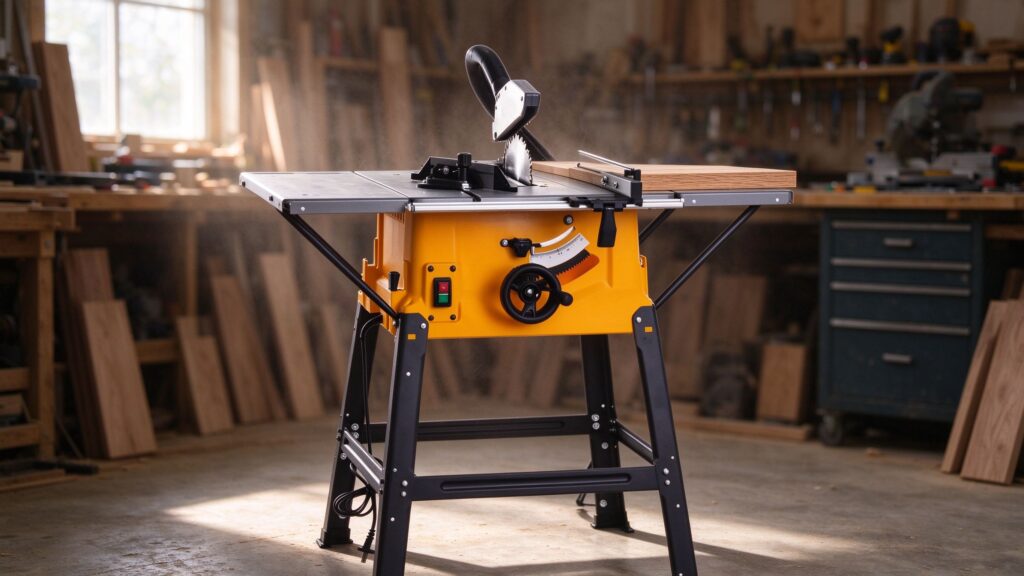
Running a busy shop floor means constantly weighing tight floor space against sheer cutting power. While we have already covered the baseline industrial applications in our full guide on what table saws are used for, depending only on heavy, fixed machinery tends to choke your daily output. A solidly built portable table saw actually fixes this exact headache. Looking at what shops really use day-to-day, the 10 table saw regularly proves itself as the go-to setup for commercial runs. This guide walks through the real-world specs that protect your lumber yield and keep jobs moving smoothly.
Solving Workflow Bottlenecks with a Portable Table Saw
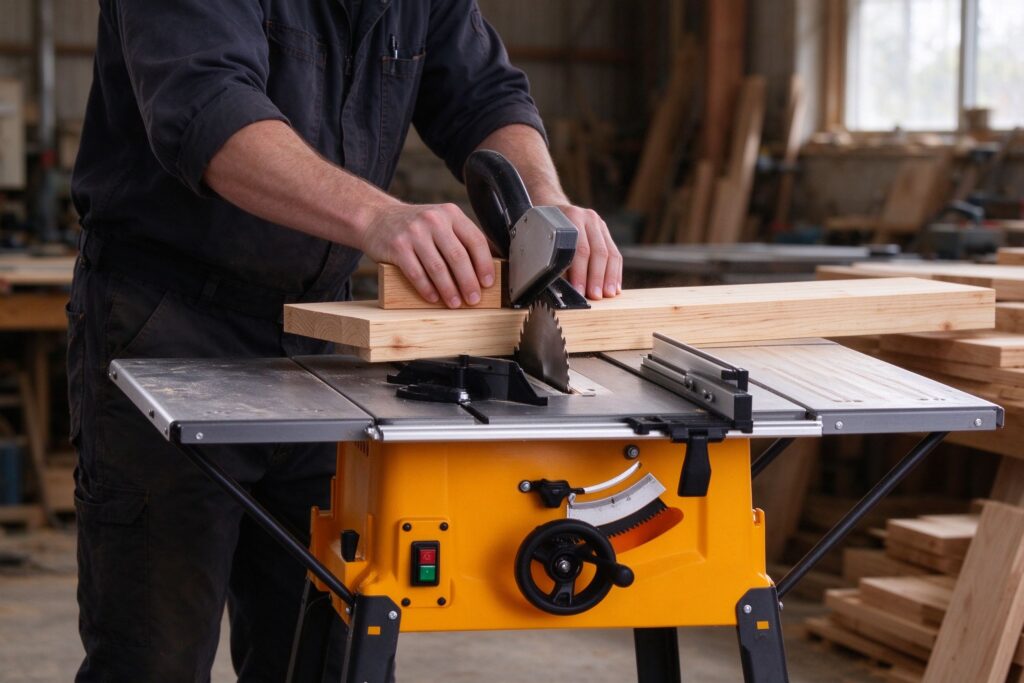
Big cabinet saws force you to design your entire workspace around them, which quickly creates bottlenecks when you are pushing large orders. Bringing a tough portable table saw into the mix gives your crew the breathing room they need. Instead of dragging heavy materials across the room, guys can roll the tool right to the staging area. This simple move cuts down material handling time in a huge way.
Mobility does not mean much if the cuts get sloppy, though. A pro-level unit holds its fence square and blade true even after rolling across concrete. Saws that need tweaking after every single move just eat up the time you originally saved.
Why the 10 Table Saw is the Standard for Hardwood Processing
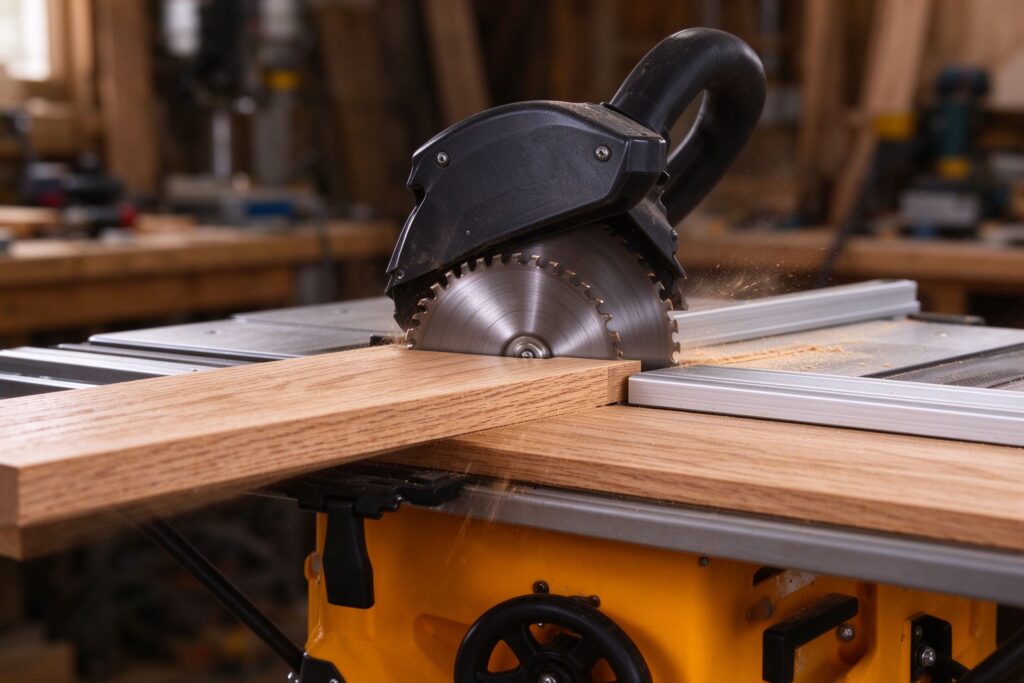
A machine’s cutting depth dictates how much expensive wood ends up in the trash bin. When looking at sizes, the 10 table saw stands as the clear baseline for actual shop work. A standard 10-inch (250mm) blade gives you just over 3 inches of vertical clearance, meaning you can rip standard 8/4 hardwood in one clean pass rather than risking burned edges on a second run.
On top of that, this size guarantees you will never wait on tooling. You can grab a specialized table saw blade for any material density off the shelf anywhere. Finding the right teeth for hard maple or fragile veneers is never a problem with a 10-inch arbor.
Technical Criteria for the Best Table Saw
Figuring out the best table saw means skipping the sales pitch and checking the mechanical guts. Pushing thick hardwood requires serious motor torque since the power unit has to keep up with feed pressure without bogging down.
The fence lock is just as critical for keeping hands safe and cuts straight. A real professional fence locks dead parallel to the blade. If it flexes even a tiny bit, the wood gets shoved into the back teeth, kicking the board right back at you. Also, bolting the whole thing to a rigid table saw stand absorbs motor shake and keeps the internal trunnions lined up over years of shop abuse.
Evaluating a Table Saw for Sale: Matching Specs to Production Needs
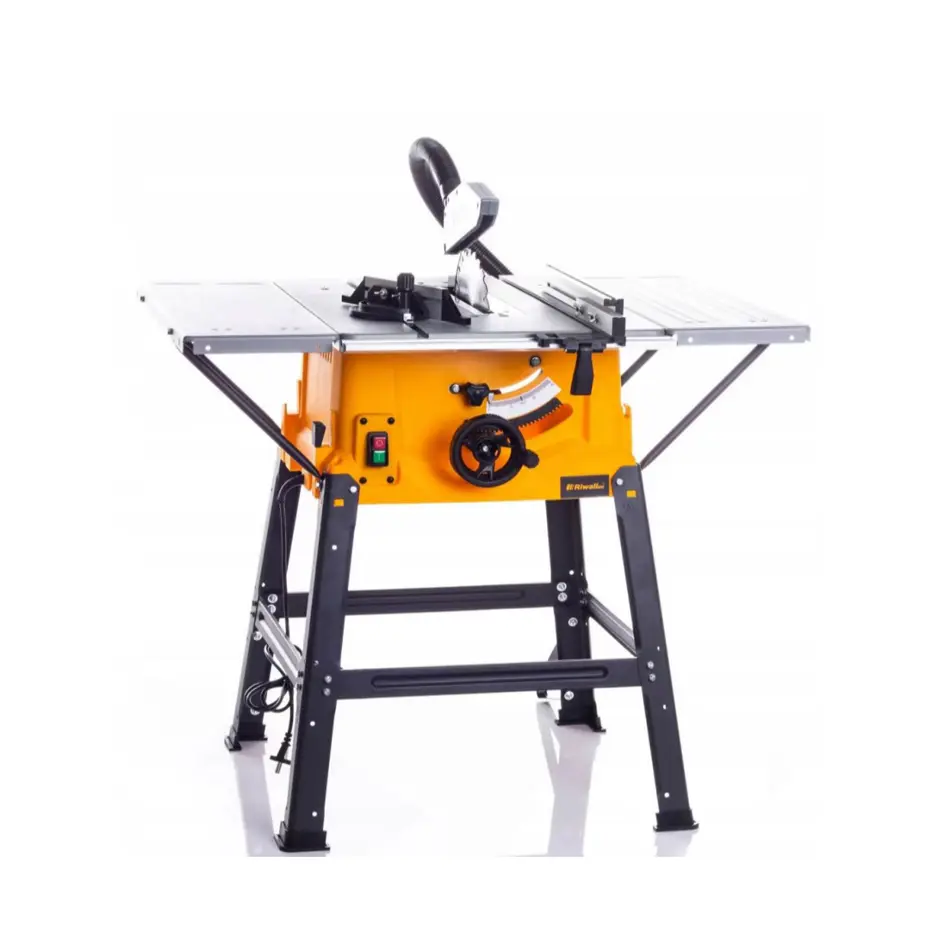
Buying gear has to match what your guys actually do on the floor. When checking out a table saw for sale, a solid build matters way more than a famous logo. You want machinery tough enough to take daily production stress.
O 250mm Professional Table Saw follows this exact line of thinking. It runs a continuous-duty motor to stop stalling during those long rip cuts. Paired with a precision-machined cast table, the wood slides through perfectly flat. It hands you the repeatable accuracy needed for high-volume jobs without charging you for a brand name. You can check the nuts-and-bolts specs and mechanical tolerances over at Longdo Global.
Perguntas frequentes
Q: Why does a portable table saw burn wood during rip cuts?
A: Nine times out of ten, scorched edges mean you are running the wrong blade or your fence is out of whack. Trying to rip lumber with a 60-tooth finishing blade traps the sawdust and builds up crazy heat. Drop in a 24-tooth rip blade instead. If that doesn’t fix it, check your rip fence alignment. If the back end pinches inward even a fraction of an inch, it jams the wood into the spinning teeth and causes instant burning.
Q: Is a portable motor sufficient for ripping thick hardwood?
A: They handle it fine, provided you don’t force the feed. Shoving a thick piece of oak into the cut is a quick way to stall a smaller motor or pop the breaker. You have to listen to the machine. Let the blade chew through at its own speed to keep the RPMs up. Pushing harder does not actually speed up the job; it just overheats the saw and leaves a terrible edge.
Q: How do you prevent a portable table saw from tipping during operation?
A: Pushing heavy, 8-foot boards creates a ton of leverage. If you balance a compact saw on a flimsy base, it is going to tip. Get a heavy-duty stand with a wide footprint first. Beyond that, you absolutely need outfeed rollers. Place them directly behind the tool to catch the dead weight of the board as it clears the blade, so it doesn’t pry the front of your saw up in the air.
