







Gasoline High Pressure Water Pump: How to Choose the Right Head and Flow?
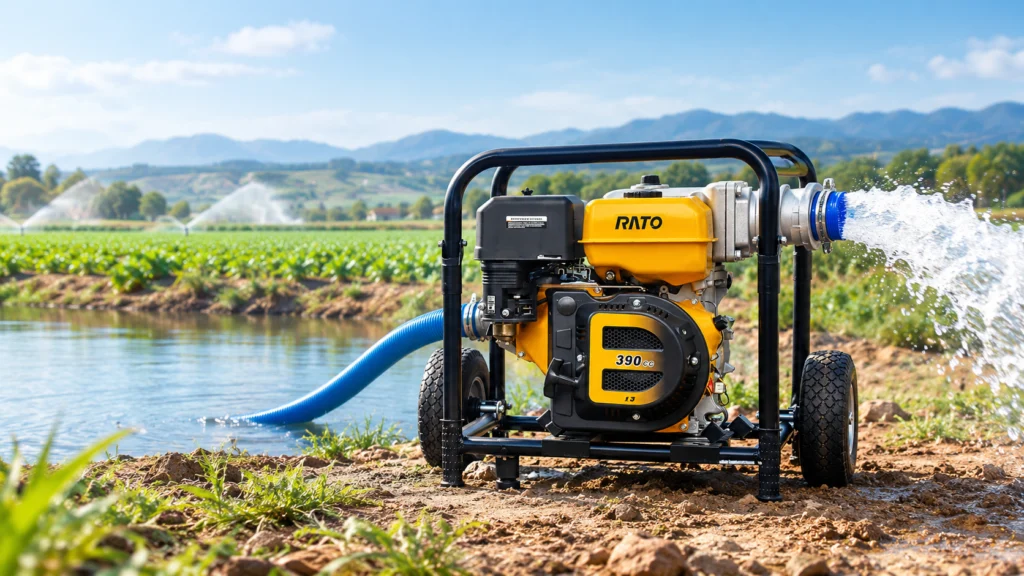
When buying a gasoline high pressure water pump, it is easy to focus on maximum head or maximum flow. But these numbers alone do not tell you how the pump will perform in your actual application.
The real flow depends on elevation, hose or pipe friction, fittings, valves, and the pressure needed at the outlet.
For irrigation, long-distance water transfer, tank filling, or remote jobs without grid power, the key is to match head and flow to the actual working conditions, not simply choose the biggest number on the specification sheet.
What Do Pump Head and Flow Rate Actually Mean?
Two specifications matter most when selecting a water pump: head et flow rate.
What Is Pump Head?
Pump head describes the energy a pump can add to water and is normally measured in meters or feet.
It is not simply the vertical height of the water source. The system may also include:
- Vertical elevation
- Hose or pipe friction
- Elbows, valves, and fittings
- Required outlet pressure
Together, these determine the total head the pump needs to handle.
What Is Flow Rate?
Flow rate tells you how much water the pump can move over a given period. Common units include m³/h, L/min, and GPM.
A high-flow application, such as filling a tank, may prioritize flow. An uphill transfer over a long hose may place greater emphasis on head.
You need both.
Why Can’t You Choose a Pump by Maximum Head or Flow Alone?
This is one of the most common water pump selection mistakes.
A pump’s maximum head et maximum flow are normally different points on its performance curve. As required head increases, available flow generally decreases.
So a pump rated for 90 m maximum head should not be expected to deliver its maximum flow at 90 m.
The same applies to high-flow models. A pump with excellent flow at low head may not perform well when the system has significant elevation or friction losses.
A practical rule is:
Choose a pump for the flow you need at the total head your system actually requires.
How Do You Calculate the Total Head for a Water Pump?
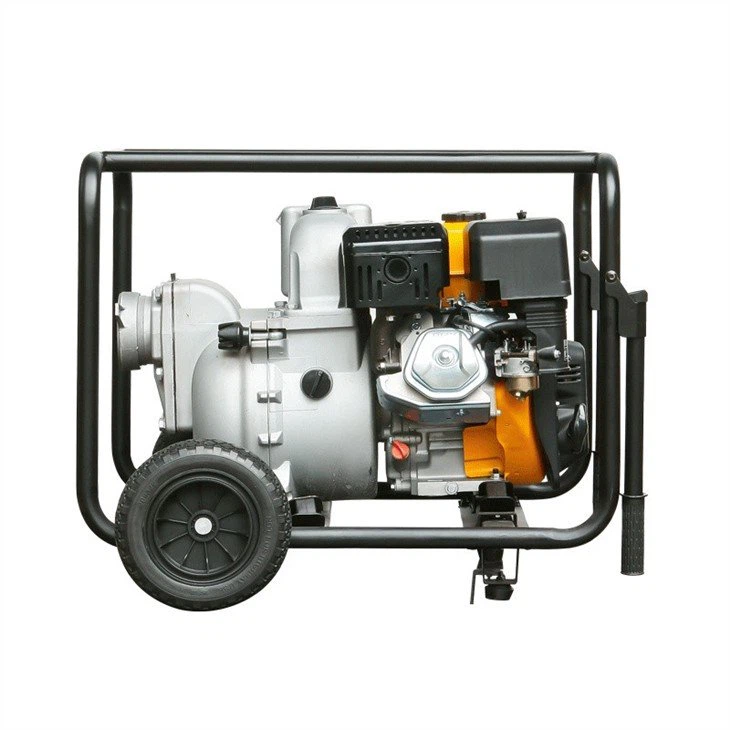
You can start with three basic factors.
Start With Static Head
Measure the vertical difference between the water source and the final discharge point.
For example, if water must move from a pond to a tank 30 meters higher, the static head is about 30 meters.
Add Hose and Pipe Friction
Long hoses and smaller pipe diameters create more resistance, especially at higher flow rates.
Friction losses are affected by:
- Hose or pipe length
- Inside diameter
- Flow rate
- Elbows and fittings
- Valves and restrictions
For long-distance transfer, correctly sizing the hose can make a noticeable difference in delivered flow.
Consider Outlet Pressure
A sprinkler, irrigation nozzle, or other discharge device may require additional pressure.
For basic planning:
Total Head = Elevation + Friction Loss + Required Outlet Pressure
This is a much better starting point than looking only at maximum pump head.
How Do You Match Head and Flow to Your Application?
When selecting a gasoline high pressure water pump, work backward from the job.
Step 1: Define the Required Flow
Determine how much water you actually need, such as 10, 20, or 30 m³/h.
Step 2: Measure the Elevation
Check the vertical distance between the source and the final discharge point.
Step 3: Check Hose Length and Diameter
Longer hoses and smaller diameters increase friction and can reduce actual flow.
Step 4: Estimate Total Head
Add elevation, friction loss, and required outlet pressure.
Step 5: Compare the Pump Data
Match your required flow + total head with the manufacturer’s performance data.
This approach is much more useful than choosing by horsepower or maximum head alone.
Which Gasoline High Pressure Water Pump Fits Your Requirements?
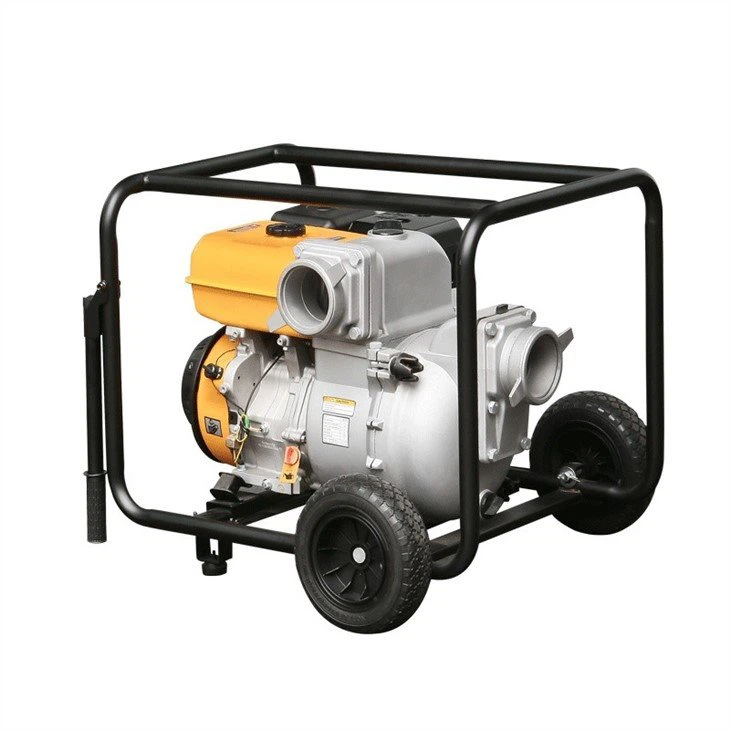
LongdoGlobal’s YB Series Gasoline High-Lift Water Pumps is designed for applications that require higher lifting capability.
| Modèle | Puissance du moteur | Port | Total Head | Capacité de décharge |
| RT50YB50-3,8Q | 4.4 kW | 2″ | 50 m | 30 m³/h |
| RT50YB80-3,8Q | 4.4 kW | 2″ | 80 m | 16 m³/h |
| RT80YB70-7,2Q | 8.2 kW | 3″ | 65 m | 38 m³/h |
| RT50YB100-7,2Q | 8.2 kW | 2″ | 90 m | 30 m³/h |
The series also provides a listed 7 m suction head lift.
Notice the difference between the models. The RT50YB80-3.8Q offers higher head than the RT50YB50-3.8Q, but a lower listed discharge capacity. The RT80YB70-7.2Q, meanwhile, combines 65 m head with 38 m³/h discharge capacity.
That is why selecting a pump by one specification alone can be misleading.
See the full Pompes à eau à haute pression à essence (série YB) specifications for more details.
What Applications Are Gasoline High Pressure Water Pumps Suitable For?
Long-Distance Water Transfer
For farms, construction sites, remote properties, and tank-to-tank transfer, both distance and elevation can affect pump performance.
Irrigation agricole
A small field with a short hose has very different requirements from a larger field using long discharge lines or elevated sprinklers. Calculate the actual head and flow before selecting a model.
Firefighting and Emergency Water Supply
When water needs to be moved quickly to a higher or more distant discharge point, higher lift capability can be important.
Remote Sites Without Grid Power
A gasoline engine allows the pump to operate where grid electricity is unavailable or inconvenient, making this type of equipment useful for outdoor, agricultural, construction, and emergency applications.
What Other Factors Should You Check Before Buying?
Suction Lift
The distance between the pump and water source matters. The YB Series provides a listed 7 m suction head lift, but installation conditions still affect performance.
Keep the suction side efficient and avoid unnecessary restrictions.
Hose Diameter and Length
Do not automatically choose the smallest hose because it is cheaper or easier to handle. Excessive friction can reduce the flow delivered at the other end.
Water Type
Check the liquid before purchasing. Pumps designed for relatively clean water are not automatically suitable for sludge or water containing large amounts of solids. Pump construction and impeller design should match the application.
What Are the Most Common Water Pump Selection Mistakes?
Choosing maximum head only. A high head rating does not show the actual flow at your operating point.
Choosing maximum flow only. A high-flow model may struggle with elevation or friction losses.
Ignoring hose friction. Long or undersized lines can reduce delivered flow.
Confusing suction lift with discharge head. They describe different parts of the system.
Skipping performance data. Head and flow figures are useful, but the real question is how the pump performs under your working conditions.
How Can You Choose the Right Gasoline High Pressure Water Pump?
Before requesting a quotation, prepare these five details:
- Required flow rate
- Vertical lift
- Hose or pipe length
- Hose or pipe diameter
- Application type
With this information, it becomes much easier to identify a suitable gasoline high pressure water pump instead of comparing models only by horsepower or maximum head.
For irrigation, long-distance water transfer, construction, and other remote applications, LongdoGlobal’s YB Series offers several head and flow configurations for different working conditions.
A good pump is not simply the one with the biggest specification. It is the one that matches your system and delivers the performance your job requires.
Need Help Choosing the Right Gasoline High Pressure Water Pump?
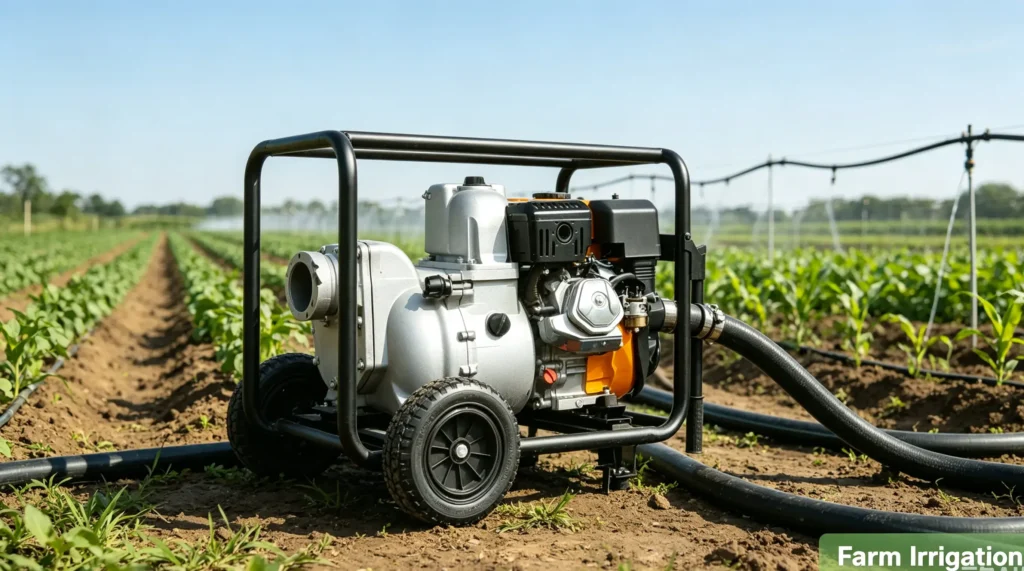
The right pump depends on your actual working conditions, not just the numbers on a specification sheet.
If you are sourcing pumps for agricultural irrigation, long-distance water transfer, construction sites, or other demanding applications, LongdoGlobal can help you identify a suitable YB Series configuration based on your required flow, total head, hose length, and application.
Whether you are buying for your own operation, building a distribution network, or sourcing in volume, share your requirements with our team and we can help you compare suitable models.
Explore the Pompes à eau à haute pression à essence (série YB) or visit LongdoGlobal to discuss your sourcing needs.
FAQ
Q: What Is the Difference Between Pump Head and Flow Rate?
A: Pump head refers to the resistance or elevation a pump can overcome, while flow rate refers to how much water the pump can deliver over a given period. Available flow generally decreases as required head increases, so both specifications should be considered together.
Q: How Do I Choose the Right Gasoline High Pressure Water Pump?
A: Start with your required flow rate, vertical lift, hose length, hose diameter, and application. Then estimate the total head and compare your requirements with the manufacturer’s performance data. Do not select a model based only on maximum head or maximum flow.
Q: Are Gasoline High Pressure Water Pumps Suitable for Long-Distance Water Transfer?
A: Yes. Gasoline-powered high-lift pumps can be suitable for long-distance water transfer, particularly where elevation is involved or grid electricity is unavailable. However, hose diameter, hose length, elevation, and outlet pressure all affect actual performance, so the complete system should be considered before purchasing.
