







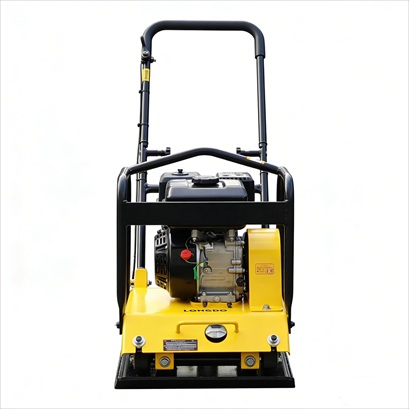
Getting ready to pour concrete or lay some patio pavers usually brings up a big question about the dirt underneath. You cannot just throw materials on loose soil and expect everything to stay flat over the years. This is where heavy equipment steps in. But what exactly are you supposed to rent or buy? Let us look closely at one of the most common tools for this job to figure out how it builds a solid foundation for construction projects.
What Is a Plate Compactor?
Before looking at the technical specs, you need a clear picture of the equipment itself. It is a very straightforward concept that solves a massive problem in daily construction tasks.
Essential Construction Compaction Machine
To answer what is a plate compactor directly, it is a heavy walk-behind machine built to press down loose soil and gravel. You fire it up and guide it over loose ground to pack everything tightly together. It removes empty space in the dirt so the ground becomes rock solid.
Heavy Steel Plate for Surface Leveling
The bottom of the unit features a thick, flat steel base. This flat plate does all the actual physical contact with the ground. Because it covers a wide footprint, it smooths out the surface beautifully while pressing down the materials underneath.
Common Applications for Site Preparation
You will see these units constantly on residential and commercial job sites. Contractors use them before pouring concrete driveways, setting brick patios, or laying asphalt. You can read more about how quality manufacturers support these daily construction needs by visiting the LongdoGlobal about us page.
How Does a Plate Compactor Work?
Knowing what the machine does gets you halfway there, but the real magic happens inside the metal housing. The unit turns raw engine power into focused ground pressure through a clever mechanical trick.
Engine Power Drives the Exciter
So how does a plate compactor work from the top down? It all starts with the motor. You pull the cord on a gas or diesel engine to get it up to speed. A rubber belt connects this spinning engine down to a lower component called the exciter housing, which sits directly bolted to the steel plate.
Eccentric Weights Create Rapid Vibrations
Inside that lower housing sits the secret to the whole process. There are heavy metal weights shaped unevenly and completely off-center. When the engine spins these eccentric weights very fast, their unbalanced nature creates violent shaking. These machines typically generate between 3,000 and 6,000 vibrations per minute (VPM). This extremely high frequency breaks the natural friction between dirt particles, causing them to slide together and settle tightly.
Forward Movement Consolidates Base Materials
All that vibrating does two things at once. First, it acts as a dirt compactor by shaking the soil particles so they settle into every tiny air pocket. Second, the specific angle of the internal vibration literally pulls the machine forward. You just hold the handle and steer while it crawls ahead on its own.
What Are the Differences Between Plate Compactors and Rammers?
Walk into any rental yard and you will spot two main types of soil packing tools. People confuse them often, but picking the wrong one will ruin your afternoon. Here is a quick breakdown to keep things clear.
| Feature | Compactador de placa | Rammer (Jumping Jack) |
| Base Shape | Wide flat steel plate | Small narrow rectangular shoe |
| Impact Type | High frequency vibration | High impact vertical blows |
| Best Soil | Sand and loose gravel | Thick cohesive clay |
| Velocidade | Fast surface coverage | Slow deliberate strikes |
| Frequência | 4,000+ VPM (Very fast) | 500 – 750 blows per minute |
| Stroke (Amplitude) | 0.04 to 0.08 inches (Tiny shift) | 2 to 3 inches (High vertical leap) |
Flat Plates vs. Jumping Jacks
A plate model stays pretty low to the ground and glides smoothly along the surface. A rammer stands upright and actually leaps a few inches into the air before slamming down with intense vertical force. Because a jumping jack drops 2 to 3 inches with every single hit, it delivers massive impact compared to the tiny 0.08-inch vibration of a flat base.
Granular Soils vs. Cohesive Clay Applications
This is the biggest rule you have to remember on site. Use plates for granular dirt like sand or crushed stone because they vibrate the loose rocks into place. Rammers belong on sticky cohesive clay. If you try running a vibrating plate on wet clay, the machine just gets stuck in the mud.
Wide Surface Areas vs. Narrow Trenches
Flat models are built for open spaces like parking lots and wide sidewalks. Rammers fit perfectly down in narrow ditches where plumbers run underground pipes because of their slim upright profile.
How to Choose the Right Ground Tamping Machine?
Shopping for equipment means looking at numbers and specs that might seem confusing at first glance. Browsing reliable equipamento de construção catalogs helps you compare the actual performance stats so you pick a machine that fits your usual workloads.
Assessing Centrifugal Force and Depth
You will always see a KN rating on these machines. KN stands for KiloNewtons and it measures the centrifugal force pushing into the earth. As a general rule on job sites, every 10 KN of centrifugal force will effectively compact about 2 to 3 inches of base material. Higher KN simply means the vibration reaches deeper into the ground.
Evaluating Engine Reliability and Power
A machine that vibrates constantly is brutal on its own parts. You need a motor that starts easily every morning and runs steady all day. Cheap motors fall apart fast under that kind of daily stress.
Perfect Choice with 12KN Compactor C60T
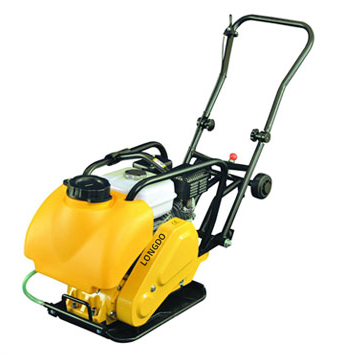
A fantastic middle ground for most paving and landscaping jobs is the Compactador 12KN C60T. With its 12KN rating, it perfectly handles a standard 4 to 6-inch layer of crushed stone in a single pass. It hits that sweet spot of having enough force for proper ground depth while staying light enough to maneuver easily around tight residential corners.
Why Do You Need a Dirt Compactor for Projects?
Some folks think they can just drive their pickup truck back and forth over loose soil to pack it. That never works in reality. Professional tools exist because gravity alone is simply not enough to prep a building site properly.
Prevention of Future Ground Settlement
When you skip real compaction, the dirt will eventually settle on its own after a few heavy rainstorms. Construction industry statistics show that over 80% of cracked concrete slabs and sunken driveways happen because the subgrade was not properly packed. Municipal engineers usually require the ground to reach at least 95% of its maximum dry density on the Standard Proctor scale (ASTM D698). You just cannot hit that number without heavy machinery.
Increase in Load-Bearing Capacity
The vibration literally shakes the water and empty air pockets out of the dirt. This forces the physical dirt particles to lock together into a dense block. Once thoroughly compacted, the soil’s load-bearing capacity increases by two to three times. The ground suddenly becomes capable of holding up heavy cars or building frames without shifting.
Reliable Base for Paving Operations
Laying block pavers over a soft base guarantees a wavy, uneven patio by next spring. Using a dedicated ground tamping machine gives you a rock-hard flat canvas to work on, making the actual paving part much faster and more accurate.
What Are the Maintenance Tips for Your Compaction Machine?
Construction environments are terrible for small engines. Dust gets everywhere and things vibrate loose. Keeping your compaction machine alive takes a little bit of daily attention before you pack up the truck.
Regular Oil and Air Filter Inspections
You are working in clouds of dust most days. That engine air filter chokes up fast. Tap it out daily. For the engine oil, change it after the first 20 hours of operation to flush out any metal shavings from the break-in period. After that, replace the oil every 100 hours or once a month. Dirty oil kills these machines quicker than anything else on the job site.
Cleaning the Base Plate After Daily Use
At the end of the shift, look at the bottom plate. If you were packing hot asphalt or wet soil, scrape it completely clean. Built up gunk on the bottom absorbs the vibrations and makes the machine run poorly the next day.
Professional Service and After-Sales Support
Even well maintained tools need repairs eventually. Buy from a brand that answers the phone when you need replacement parts. Good companies offer dedicated serviço teams to help out. You can also read up on the latest industry updates in their notícias section to keep your fleet running smoothly.
Perguntas frequentes
Q1: How thick of a soil layer can a standard model compact?
A: A typical machine handles about two to six inches of soil at a time depending on its KN rating and the type of dirt.
Q2: Do I need to wet the dirt before compacting it?
A: Yes, a little bit of moisture helps bind the dust and rock particles together, but the ground should never be completely muddy.
Q3: Can these machines compact hot asphalt?
A: Absolutely. Many models include a small water tank that drips over the base plate to stop the sticky asphalt from binding to the hot metal.
Q4: Why does the machine bounce in place without moving forward?
A: The soil might be too hard already, or there is too much clay in your mix. It also happens when the drive belt starts slipping.
Q5: Is it safe to use this equipment on a steep hill?
A: You have to be extremely careful. Work straight up and down the slope rather than across it to keep the machine from rolling over onto your legs.
