







How to Compact Dirt, Gravel, and Paver Bases: A Practical Guide
Getting the base right is not the most exciting part of a construction or hardscaping project, but it has a lot to do with how well the finished surface performs over time. A patio, driveway, walkway, or small foundation can look perfect when it is first completed. Problems often show up later when the material underneath was never compacted properly.
Good compaction reduces unnecessary voids, improves the stability of the base, and creates more consistent support for the work above it. The important part is choosing the right method for the material, controlling moisture, and using equipment that matches the job.
Why Does Proper Soil Compaction Matter?
Loose soil and aggregate contain air spaces between individual particles. Under traffic, rain, changing moisture conditions, and the weight of structures or vehicles, those materials can settle. That movement can eventually show up as uneven surfaces, low spots, cracked concrete, or displaced pavers.
Reduce Settlement and Surface Problems
The main purpose of compaction is to create a denser and more stable layer before the finished surface is installed.
When soil is compacted correctly, the particles are brought closer together and the amount of unwanted void space is reduced. This gives the pavement, slab, or other surface more uniform support.
Project specifications may require a particular percentage of Proctor density, but the exact target depends on the soil type, project design, and local construction requirements. For that reason, it is better to follow the specification for the job rather than rely on one number for every application.
Improve Load-Bearing Performance
A properly compacted base can handle repeated loads more consistently than loose material. This matters for everything from pedestrian walkways to driveways and equipment access areas.
The goal is not simply to make the surface feel hard. The deeper objective is to create a stable layer that can distribute loads without excessive movement.
Manage Moisture and Frost-Related Movement
Moisture also plays a major role in ground stability. Soil that is too wet can lose strength and become difficult to compact, while poorly drained or frost-susceptible soils may experience movement during freeze-thaw cycles.
Compaction helps improve the stability of the soil structure, but it is not a substitute for proper drainage or suitable base material. In colder climates, soil type, groundwater, drainage, and frost susceptibility all need to be considered as part of the overall site preparation.
Choosing the Right Compaction Method for Different Soil Types
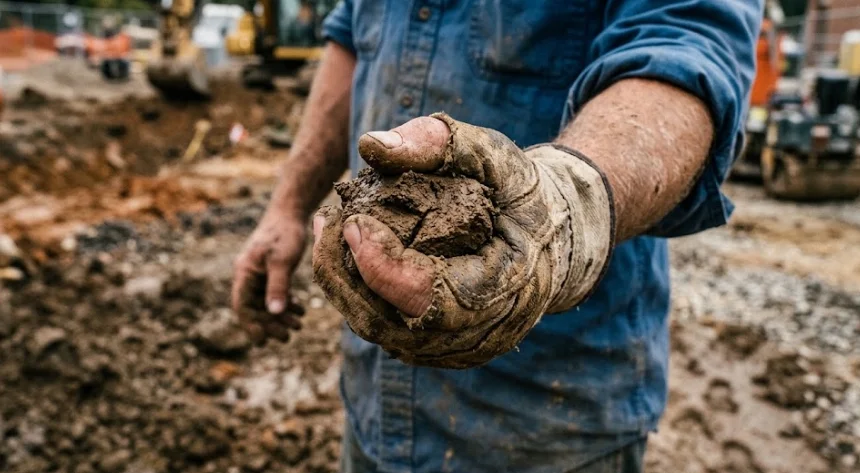
There is no single machine or technique that works equally well for every material. Before choosing a compactor, look at the soil type, moisture condition, available space, and required depth.
Cohesive Clay Soil Requires Moisture Control
Clay can be difficult to compact because its behavior changes significantly with moisture.
When it is too dry, clay can break into hard clods instead of forming a dense layer. When it is too wet, the material can deform under the machine and may stick to the bottom plate.
A simple field check is to squeeze a handful of material and see whether it holds together without releasing excess water. If moisture needs to be adjusted, add water gradually and mix it through the material rather than soaking the surface.
For cohesive soils and confined areas, a tamping rammer is often more suitable than a conventional flat plate compactor because its impact action is better suited to these conditions.
Granular Soil Benefits From Vibratory Compaction
Sand, crushed stone, and gravel behave differently. These granular materials do not bind together in the same way as clay, so vibration helps the particles move into a tighter arrangement.
This is where a vibratory plate compactor becomes useful. The machine’s vibration works through the aggregate and helps create a more stable base. The required machine size depends on the material, lift thickness, site conditions, and project requirements.
Choose Equipment for Consistent Performance
Machine reliability matters on real jobs. A compactor that stops frequently, struggles with the material, or requires constant adjustment can slow down the entire project.
For contractors and equipment buyers, dependable construction equipment is not only about engine performance. Operating weight, compaction force, plate size, maneuverability, serviceability, and parts availability all affect how practical a machine will be in daily use.
How to Compact a Gravel Base in Lifts
Gravel is widely used for driveways, patios, walkways, and other base applications. One common mistake is placing a thick layer all at once and trying to compact it from the top.
Compaction works more effectively when the material is installed in manageable lifts.
Place the Gravel in Controlled Lifts
Spread the aggregate evenly and compact one layer before adding another. The appropriate lift thickness depends on the material and equipment, so always take the machine manufacturer’s guidance and the project specification into account.
As a general working principle, thinner and more manageable lifts are easier to compact consistently than one very thick layer.
Make Overlapping Passes
Run the compactor across the entire area using overlapping passes. Keep the machine moving instead of repeatedly working one small spot.
The number of passes needed will vary with material and site conditions. A useful practical indicator is reduced visible movement and a more stable surface, but project specifications or field density testing should be used where a specific compaction target is required.
Use the Right Machine for the Working Area
Equipment choice should also consider access.
A plate compactor is well suited to open granular bases. In a narrow trench or around utilities, however, the working width of a plate may become a limitation. A tamping rammer can be easier to control in these confined spaces and can deliver a more direct impact.
Using an 18KN Compactor for Granular Base Preparation
For contractors working with sand, gravel, and other granular materials, the 18KN Compactor C90 is designed to provide a practical balance between compaction force and maneuverability.
Its 18 kN centrifugal force makes it suitable for general granular-base preparation, while the self-propelled travel helps reduce the physical effort required from the operator.
For buyers comparing equipment, it is worth looking beyond centrifugal force alone. Machine weight, vibration frequency, plate dimensions, travel characteristics, engine configuration, and service support all contribute to how effectively a compactor performs on site.
In other words, the right question is not simply “How many kilonewtons does it have?” It is whether the machine matches the material and the actual working conditions.
How to Compact Paver Bases Without Damaging the Surface
Compaction does not stop once the aggregate base is finished. Pavers may also need mechanical compaction during installation, but this stage requires more care because the finished surface is now exposed.
Prepare an Even Bedding Layer
Before placing the pavers, the bedding layer should be screeded evenly. Low spots and high spots in this layer can affect the finished surface and make consistent compaction more difficult.
Good preparation at this stage saves time later. Trying to correct an uneven bedding layer with repeated machine passes is rarely the best solution.
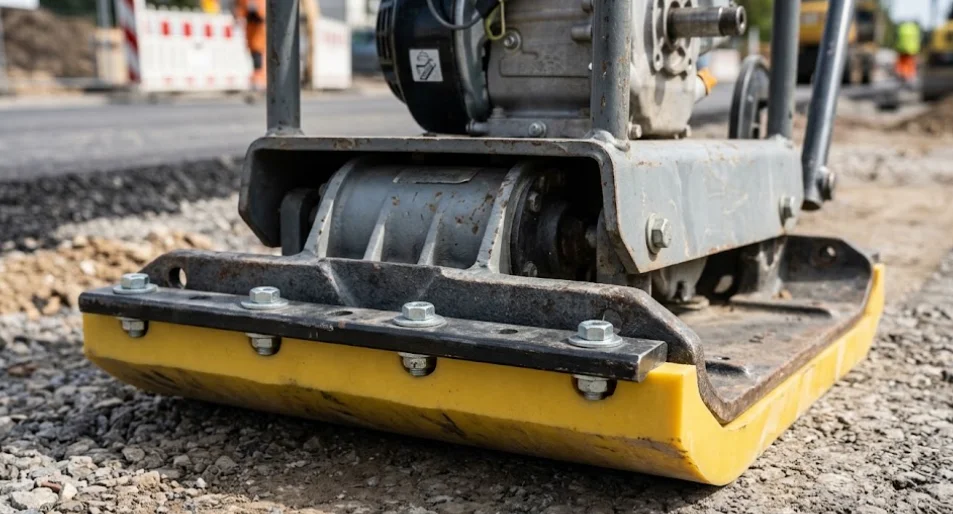
Use a Compatible Protective Paver Pad
When the paver manufacturer permits mechanical compaction, a compatible polyurethane or urethane pad should be used to reduce the risk of scuffing, marking, or damaging the surface.
Do not assume that the same setup is suitable for every paving material. Always check the paver manufacturer’s installation instructions before compacting the finished surface.
Follow a Controlled Compaction Sequence
Keep the machine moving in smooth, overlapping passes. Avoid stopping for extended periods in one location because repeated vibration in a small area can disturb the pavers or affect the final level.
The installation sequence may include initial compaction, joint sand placement, and additional passes to settle the sand into the joints. The exact procedure should follow the paver manufacturer’s recommendations.
Choosing the Right Compaction Equipment
The best machine depends on the material and the job, not simply on the highest available compaction force.
| Equipment | Typical Use | Key Considerations |
|---|---|---|
| Light Plate Compactor | Small paths, patios, light granular work | Easy handling and maneuverability |
| Medium Plate Compactor | Gravel bases, driveways, general site preparation | Balance of force, weight, and working width |
| Tamping Rammer | Clay, cohesive soil, trenches, confined areas | Direct impact and narrow working footprint |
| Reversible Plate Compactor | Heavier granular work and larger bases | Greater control for deeper or demanding applications |
For contractors or distributors sourcing compaction equipment, it is also worth considering spare parts, technical support, warranty terms, and long-term service availability. A machine is only useful when it can keep working.
Why Work With LongdoGlobal for Compaction Equipment?
Choosing equipment is only one part of the buying decision. For contractors, rental companies, dealers, and importers, the supplier behind the machine matters as well.
Practical Manufacturing Experience
LongdoGlobal develops construction equipment for real job-site conditions, where machines are exposed to dust, vibration, outdoor work, and frequent transport.
More information about the company and its product background is available on the About Us page.
Service and Parts Support
Construction equipment eventually needs maintenance. Access to replacement parts and technical assistance can make a significant difference when a machine is already in the field.
LongdoGlobal provides customer support through its service department to help customers keep equipment operating and reduce unnecessary downtime.
FAQ
Q1: What happens if you do not compact the dirt before building?
Poorly compacted soil may settle unevenly over time. Depending on the project, this can lead to low spots, uneven pavers, cracking, or other surface problems.
Q2: Can you use a plate compactor on wet soil?
Moisture needs to be controlled rather than simply added. Soil near its appropriate moisture condition generally compacts more effectively, while saturated material may deform, rut, stick to the plate, or lose stability.
Q3: How thick should each compaction lift be?
There is no single lift thickness that works for every project. Effective thickness depends on the material, moisture condition, equipment specifications, and required compaction level. Always follow the equipment manufacturer’s recommendations and project requirements.
Q4: Do you need a pad when compacting paving stones?
When mechanical compaction is permitted, a compatible polyurethane or urethane pad is generally recommended to reduce the risk of scuffing and surface damage. The paver manufacturer’s installation instructions should always take priority.
Q5: Why use a tamping rammer instead of a plate compactor?
A tamping rammer delivers a more concentrated impact and is easier to use in narrow or confined areas such as trenches. A plate compactor is generally more practical for open areas and granular base materials.
